

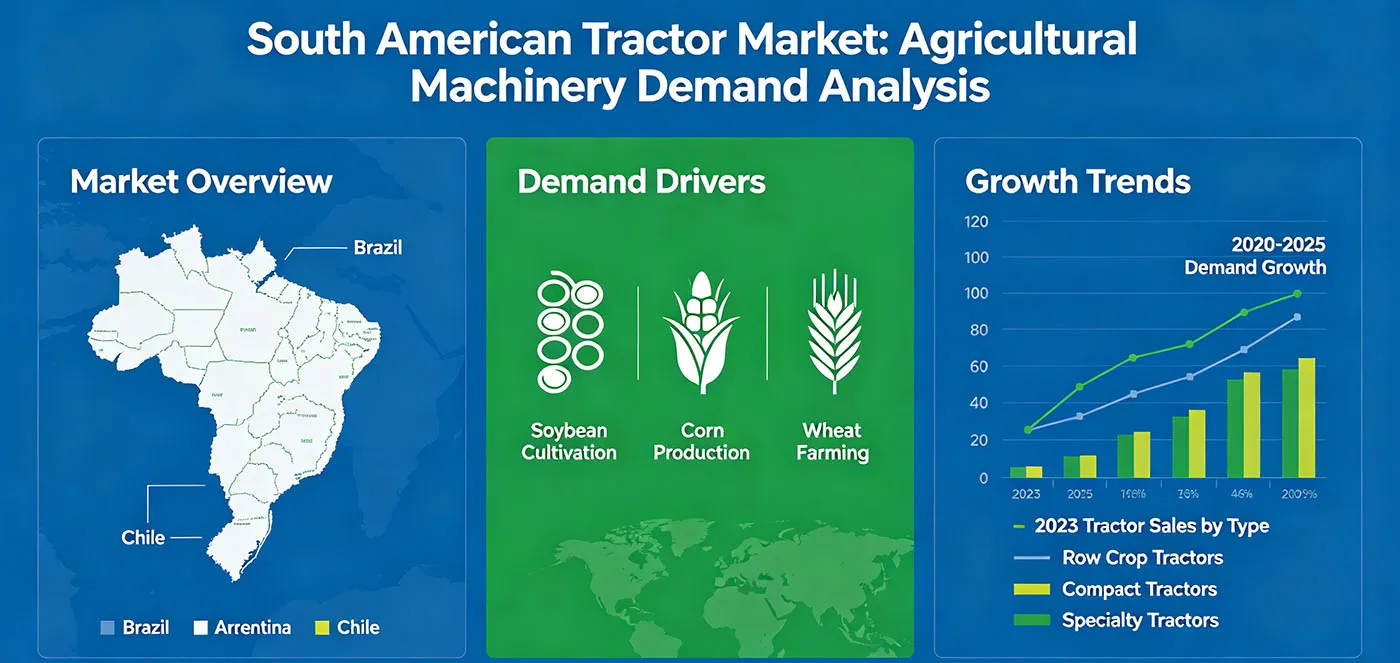
The demand for agricultural machinery in the South American tractor market is mainly concentrated in large, high-performance equipment, especially in agricultural countries such as Brazil and Argentina.
There is a strong demand for efficient agricultural machinery such as tractors and combine harvesters, and users' power requirements continue to increase.
In addition, with the advancement of agricultural modernization, the South American market is gradually developing towards intelligence and automation.
The application of technologies such as autonomous tractors, precision seeders, and unmanned aerial vehicles for crop protection is gradually becoming popular, promoting the upgrading of agricultural machinery products.
Core Characteristics of Requirements
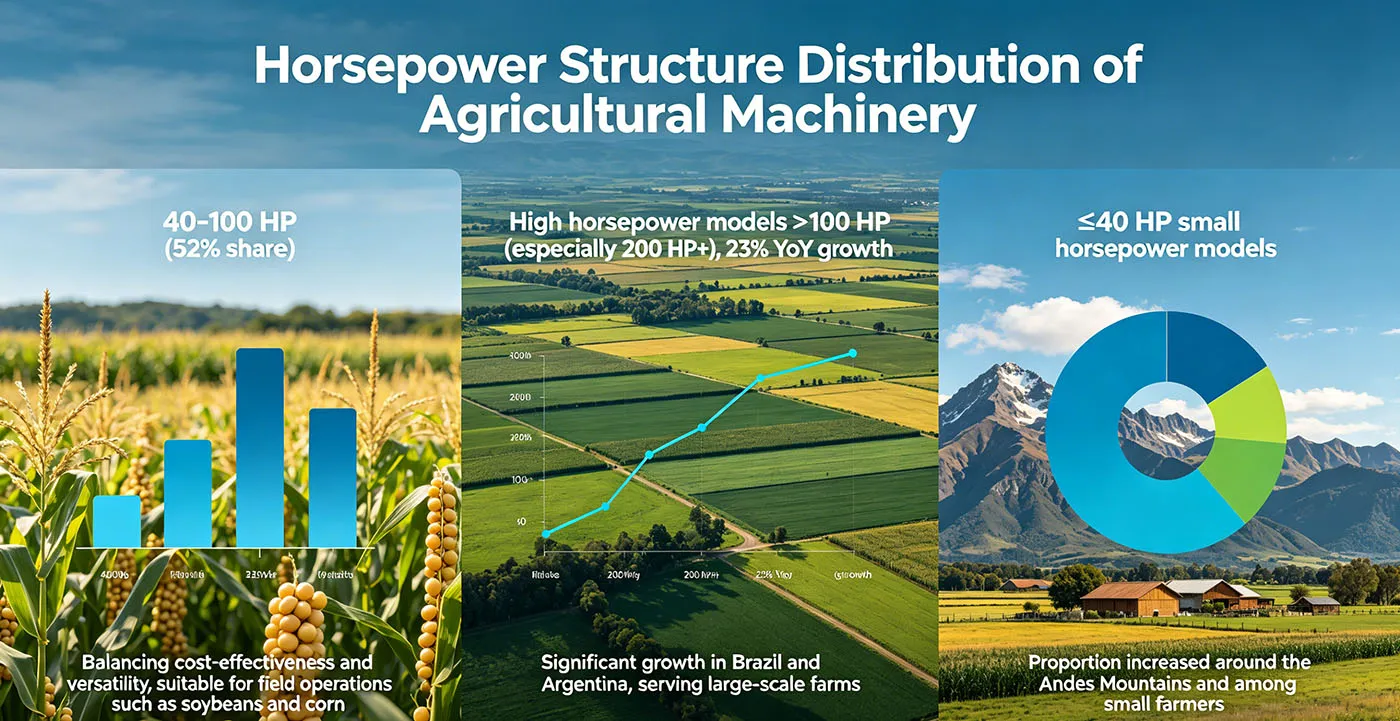
Horsepower structure: 40-100 HP is the absolute mainstay (about 52% share), balancing cost-effectiveness and versatility, suitable for field operations such as soybeans and corn;
High horsepower models above 100 HP (especially 200 HP+) have a significant year-on-year growth rate of 23% in Brazil and Argentina, serving large-scale farms;
The proportion of small horsepower models with a capacity of ≤ 40 HP has increased around the Andes Mountains and among small farmers.
Drive type: Two wheel drive (2WD) is the mainstream, with low cost and easy maintenance, suitable for plain and conventional working conditions;
Four wheel drive (4WD) is growing rapidly, with a penetration rate of over 65% in central and western Brazil, capable of handling complex terrains and heavy-duty operations.
Application scenario: Agriculture dominates the entire process of land preparation, sowing, plant protection, and harvesting;
Specialized models (such as short body and high passability track models) have emerged in segmented scenarios such as orchards and mountains.
Technological trend: intelligent acceleration, with a penetration rate of 29% for autonomous driving/navigation, and dual mode configuration of Beidou and Galileo as standard;
New energy penetration, hybrid power accounts for about 18%, and biodiesel compatible models have a market share of over 12% in Brazil;
Regulations are becoming stricter, and the share of Euro V standards has risen to 57%.
Brazil: As the largest agricultural machinery market in South America, the annual demand for tractors ranges from 35000 to 50000 units. The market is dominated by international brands, with AGCO leading the market share for a long time and a high proportion of local assembly production.
Argentina: The market demand fluctuates greatly, but there is a clear preference for high-power tractors. By the end of the 20th century, the average power per unit had exceeded 96PS, and currently it is generally between 100-130PS.
Chile: The market size is relatively small, with annual sales volume maintained between 790-2300 units, and the market development shows a trend of first decreasing, then increasing, and then decreasing again.
Policy support also significantly affects demand, such as the Brazilian government's implementation of the "Agricultural Modernization Plan", which provides subsidies for the purchase of agricultural machinery and effectively stimulates market growth.
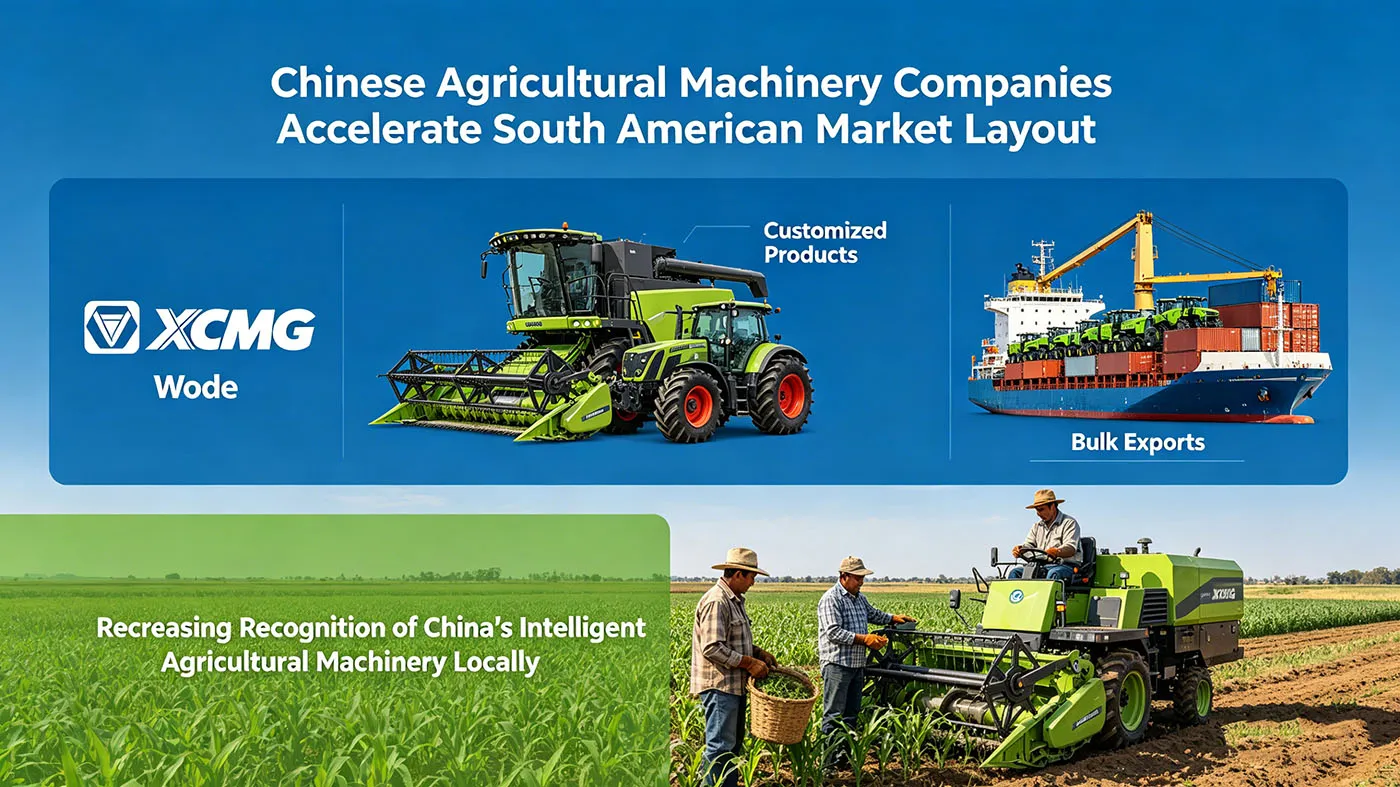
At the same time, Chinese agricultural machinery companies such as XCMG and Wode are accelerating their layout in the South American market through customized products and bulk exports, reflecting the increasing recognition of China's intelligent agricultural machinery in the local area.


