

Global Scale of Agricultural Tractor Industry – LEADRAY Market Perspective
The global agricultural tractor industry stands at a $79-89 billion valuation in 2025 with approximately 2.8-3.2 million units sold annually and a global fleet exceeding 35 million tractors in operation.
The industry is undergoing a profound transformation, with solar-electric tractors emerging as the fastest-growing segment (CAGR 25-30%) as farmers prioritize sustainability, energy independence, and operational efficiency.
LEADRAY's solar-electric tractor portfolio is positioned to capture this transition, offering 30-60% lower total cost of ownership (TCO) compared to traditional diesel alternatives.
1. Market Size & Growth Trajectory
1.1 Current Valuation (2025)
| Research Firm | Market Value (2025) | CAGR (2025-2030/32) |
|---|---|---|
| Mordor Intelligence | $89.8 billion | 5.9% |
| Coherent Market Insights | $89.2 billion | 5.8% |
| The Business Research Company | $82.29 billion | 5.3% |
| Straits Research | $79.91 billion | 5.75% |
| Fortune Business Insights | $64.8 billion | 6.5% |
Average consensus: $82-85 billion in 2025
1.2 Growth Drivers
Mechanization expansion: Global agricultural mechanization rate at 45% (2025), growing to 60% by 2035
Labor shortages: 1.5% annual decline in global farm labor force, driving demand for automated solutions
Precision agriculture adoption: 35% of new tractors feature GPS guidance, auto-steering, and telematics
Sustainability mandates: 70+ countries committed to net-zero agriculture by 2050
Smallholder mechanization: 80% of global farms are smallholder operations (≤5 hectares), creating demand for compact, affordable tractors
2. Production & Sales Volume
2.1 Annual Production (2024-2025)
Global tractor production: 2.9-3.2 million units annually
Top 3 producing countries:
China: 900,000-1,100,000 units (30-35% global share)
India: 850,000-900,000 units (28-30% global share)
United States: 250,000-300,000 units (8-10% global share)
2.2 Power Segment Distribution (Volume)
| Power Range | Market Share | Primary Applications |
|---|---|---|
| Below 40 HP | 58-65% | Smallholder farms, orchards, greenhouses, specialty crops |
| 40-100 HP | 25-30% | Mixed farming, row crops, medium-scale operations |
| Above 100 HP | 10-12% | Large-scale commercial farming, heavy tillage, high-value crops |
Below 40 HP segment growing fastest at 7.5% CAGR (2025-2030)
3. Regional Market Analysis
3.1 Market Share by Region (2025)
| Region | Market Share | Key Markets | Growth Rate |
|---|---|---|---|
| Asia-Pacific | 48-52% | China, India, Japan, Southeast Asia | 6.0-6.5% |
| Europe | 22-25% | Germany, France, Italy, UK | 4.0-4.5% |
| North America | 20-22% | United States, Canada | 4.0-5.0% |
| Latin America | 5-7% | Brazil, Argentina, Mexico | 5.0-5.5% |
| Middle East & Africa | 3-5% | South Africa, Nigeria, Saudi Arabia | 7.0-7.5% (fastest growing) |
3.2 Regional Market Highlights
Asia-Pacific: Dominated by small tractors (≤40 HP) due to fragmented landholdings; China leads exports with 223,381 shipments (2025)
Europe: Highest adoption of electric tractors (12% penetration by 2027); strong demand for precision agriculture technologies
North America: Focus on high-power tractors (100+ HP) for large-scale commercial farming; California leads electric adoption due to strict emissions laws
Latin America: Soybean and corn production driving demand for 200+ HP models; hybrid tractor penetration at 18% (2025)
Middle East & Africa: Government mechanization programs and off-grid solar opportunities creating demand for solar-electric solutions
4. Competitive Landscape
4.1 Top Global Manufacturers (2025 Market Share)
| Manufacturer | Market Share | Key Strengths |
|---|---|---|
| Mahindra & Mahindra | 14-16% | Small tractors, India market dominance, global distribution |
| John Deere | 12-14% | High-power tractors, precision agriculture leadership, North American market |
| CNH Industrial (Case IH, New Holland) | 10-12% | Global presence, innovation in autonomous technology |
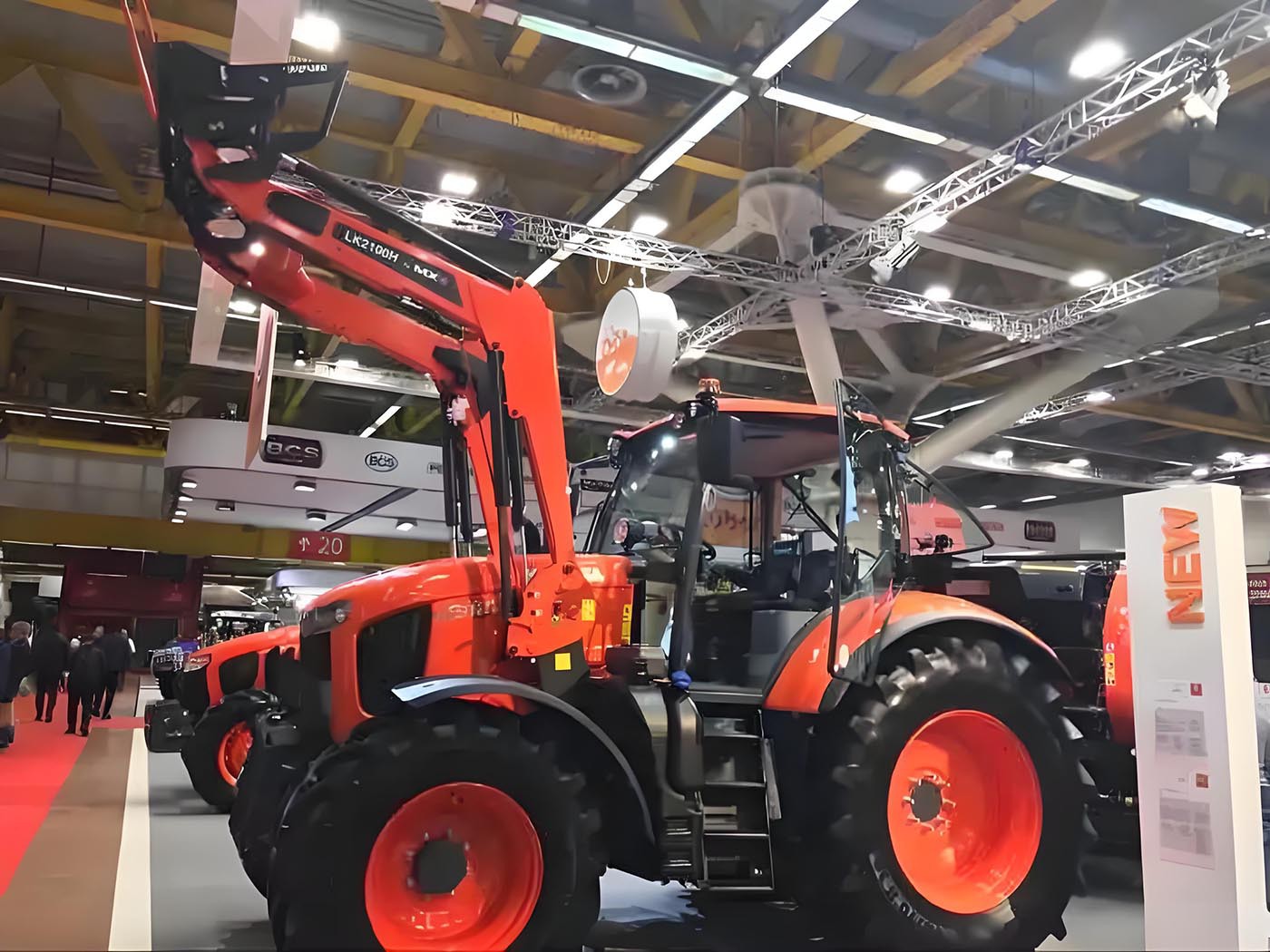
| Kubota | 8-10% | Compact tractors, Japanese quality, strong in Europe and North America |
| SDF Group (Same Deutz-Fahr) | 10.4% | European market leadership, diverse product range |
| LEADRAY | 1-2% | Solar-electric innovation, zero-emission solutions, growing market share |
4.2 Market Consolidation
10 largest manufacturers control 70-75% of global market share
104 smaller manufacturers exited the market between 2020-2025 due to competition and technological disruption

5. Power & Technology Segmentation
5.1 Power Range Distribution (Value)
| Power Range | Market Value (2025) | Growth Rate | Key Applications |
|---|---|---|---|
| Below 40 HP | $35-40 billion | 6.5-7.0% | Small farms, greenhouses, orchards |
| 40-100 HP | $25-30 billion | 5.5-6.0% | Mixed farming, vegetable production |
| 100+ HP | $20-25 billion | 4.5-5.0% | Large-scale row crops, heavy tillage |
5.2 Propulsion Technology Shift
| Technology | Market Share (2025) | CAGR (2025-2030) | Key Players |
|---|---|---|---|
| Diesel | 94-96% | 3.0-3.5% | Traditional manufacturers |
| Electric (BEV) | 3-5% | 25.8% | LEADRAY, Monarch, Solectrac |
| Hybrid (HEV) | 1-2% | 18.0-20.0% | John Deere, Kubota |
| Solar-Electric | 0.5-1.0% | 30.0-35.0% (fastest growing) | LEADRAY (market leader) |
6. Global Tractor Fleet & Utilization
Total global tractor fleet: 35-38 million units (2025)
Average age of fleet: 12-15 years (replacement cycle 15-20 years)
Utilization rate: 1,200-1,500 hours annually for commercial farms; 500-800 hours for smallholder operations
Energy consumption: Diesel tractors consume 20-30 liters/hour; LEADRAY solar-electric tractors reduce energy costs by 70-90%
7. LEADRAY's Position in the Global Tractor Industry
7.1 Solar-Electric Tractor Leadership
Market share: 0.5-1.0% of global tractor market (2025), growing to 5-7% by 2030
Product portfolio: S25E (25 HP), S35E (35 HP), S55E (55 HP) solar-electric tractors with LiFePO₄ batteries and 400-1,000 W solar arrays
Competitive advantages:
Energy independence: Solar + battery storage eliminates grid dependency by 80%
Low TCO: 30-60% savings over 5 years vs. diesel tractors
Zero emissions: Compliance with EU Stage V, US Tier 5, and carbon neutrality goals
Reduced maintenance: 200 vs. 2,000+ moving parts in diesel tractors
7.2 Growth Strategy
Regional focus: Asia-Pacific (smallholder farms), Europe (sustainability mandates), Africa (off-grid opportunities)
Partnerships: Collaborations with agricultural equipment dealers and renewable energy companies
Innovation pipeline: Autonomous capabilities by 2030, energy sharing via farm microgrids
8. Future Outlook (2025-2035)
Market Expansion: Global tractor market to reach $120-135 billion by 2032
Electrification Revolution: Electric tractors to capture 15-20% market share by 2030, growing to 30-35% by 2035
Solar-Electric Dominance: Solar integration to become standard in electric tractors by 2030, with conversion efficiency reaching 30%+
Autonomous Transformation: Full autonomy for 25-55 HP tractors by 2030, increasing productivity by 20-30%
Circular Economy: Recyclable components and battery repurposing programs to reduce environmental impact by 40%
Key Takeaways
The global agricultural tractor industry is a $82-85 billion market (2025) with steady growth (CAGR 5.3-5.9%) and undergoing a significant technological transformation.
While diesel still dominates (94-96% market share), solar-electric tractors are emerging as the fastest-growing segment (CAGR 30-35%). LEADRAY is positioned at the forefront of this revolution, offering sustainable, cost-effective solutions that address modern farming challenges while delivering 30-60% lower TCO compared to traditional diesel tractors.
Would you like me to create a concise 1-page comparison table of LEADRAY solar-electric tractors vs. leading diesel competitors across key metrics (cost, emissions, maintenance, productivity, ROI) for easy reference?


