

Yes, the power output of an agricultural tractor can be adjusted or modified through several methods:
1. Agricultural tractor engine - related adjustments
Fuel injection system tuning
Principle: The fuel injection system controls the amount and timing of fuel injected into the engine cylinders. By adjusting the fuel injection pump or using an electronic control unit (ECU) in modern tractors, you can change the fuel quantity per injection cycle. More fuel injected can lead to more powerful combustion and thus increased power output.
Example: In older tractors with mechanical fuel injection pumps, a skilled mechanic can adjust the settings of the pump to increase or decrease the fuel delivery. In modern tractors, the ECU can be reprogrammed (with proper authorization and within legal limits) to modify the fuel injection parameters.
Air intake and exhaust system upgrades
Principle: A more efficient air intake system allows more air to enter the engine cylinders. Since combustion requires both fuel and air, more air enables more complete combustion of the fuel, increasing power. Upgrading the exhaust system to reduce back - pressure helps the engine expel exhaust gases more easily, which also improves engine efficiency and power output.
Example: Installing a high - flow air filter or a performance - oriented intake manifold can enhance the air intake. A free - flowing exhaust pipe with a larger diameter and better - designed muffler can reduce exhaust back - pressure.

2. Transmission agricultural tractor adjustments
Gear ratio changes
Principle: The transmission in a tractor has different gear ratios. By changing the gear ratio, you can adjust the relationship between the engine speed and the speed of the tractor's wheels. Lower gear ratios (higher numerical values) provide more torque at the wheels but lower speed, which is useful for heavy - duty tasks such as plowing. Higher gear ratios (lower numerical values) allow for higher speeds but less torque.
Example: Some tractors have a multi - speed transmission or a continuously variable transmission (CVT). In a multi - speed transmission, you can select different gears according to the task. In a CVT, the gear ratio can be continuously adjusted within a certain range to optimize power output for different working conditions.
Power take - off (PTO) agricultural tractor speed adjustment
Principle: The PTO is used to transfer power from the tractor to attached implements. Many tractors allow you to adjust the PTO speed to match the requirements of different implements. For example, some implements work best at a specific rotational speed, and adjusting the PTO speed ensures optimal performance.
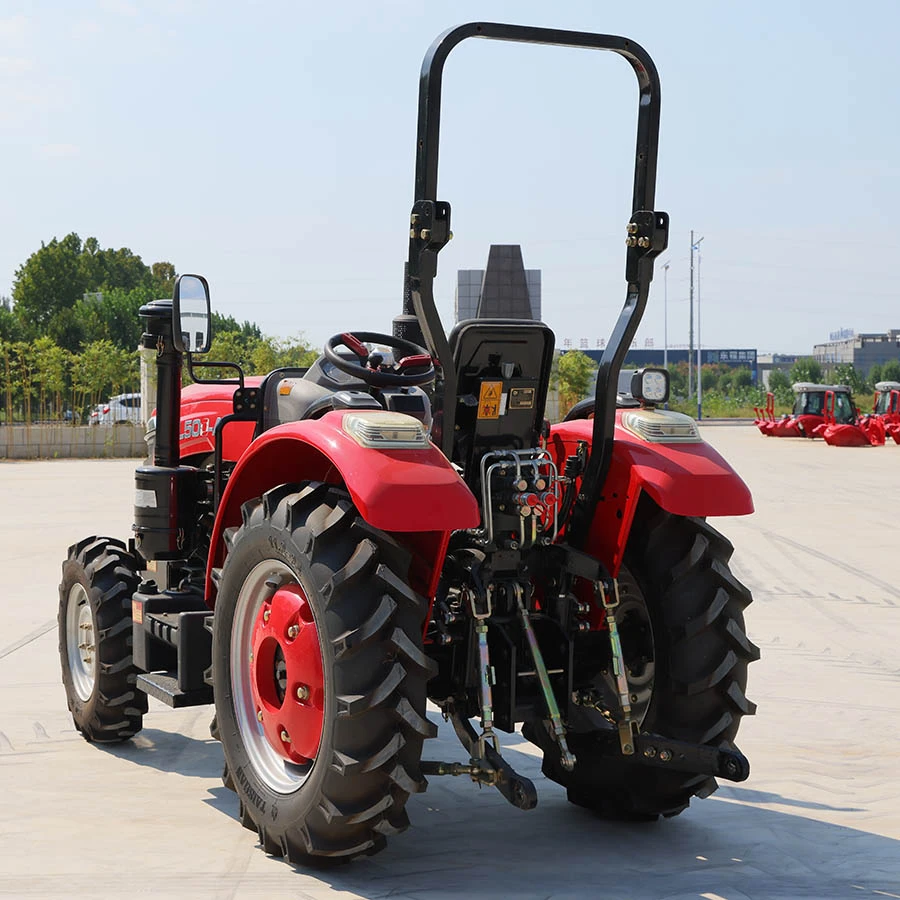
Example: You can change the PTO speed settings through a lever or a control panel on the tractor. Common PTO speeds are 540 RPM and 1000 RPM, and you can select the appropriate one based on the implement being used.
3. Hydraulic system adjustments
Pressure and flow rate agricultural tractor control
Principle: The hydraulic system in a tractor is used for functions such as lifting and operating implements. By adjusting the pressure and flow rate of the hydraulic fluid, you can control the power output of the hydraulic system. Higher pressure and flow rate can provide more force to lift heavier implements or operate hydraulic - powered tools more effectively.
Example: Tractors are usually equipped with hydraulic control valves that allow you to adjust the pressure and flow rate. Some modern tractors may have electronic controls for more precise adjustment.
However, agricultural tractor's important to note that any adjustments or modifications should be done within the tractor's design limits and in accordance with relevant safety and environmental regulations. Unauthorized or improper modifications can lead to mechanical failures, reduced reliability, and potential safety hazards.


