

European farms, long dominated by homegrown giants like John Deere
New Holland, and Fendt, are increasingly turning their attention to Chinese tractor manufacturers-a shift driven by a mix of technical innovation, adaptability to European needs, and competitive value.
What was once a market dismissed as "low-cost alternatives" is now earning respect for reliability, eco-friendliness, and smart design, making Chinese tractors a surprising favorite among European farmers.
Why European Farms Are Embracing Chinese Tractors
The appeal lies in a deliberate alignment with European agricultural priorities-efficiency, sustainability, and suitability for small-to-medium farms-paired with a break from outdated stereotypes of "cheap, low-quality" imports.

Meeting Strict European Standards
European farming is governed by rigorous regulations, from emissions (Euro V/VI) to safety (CE certification) and ergonomics. Chinese manufacturers have invested heavily in compliance:
Emissions Control: Brands like Lovol (Weichai) and YTO (Dongfanghong) equip tractors with advanced diesel particulate filters (DPFs) and selective catalytic reduction (SCR) systems, meeting Euro VI standards-critical for access to EU markets.
Safety and Durability: Tractors now feature roll-over protective structures (ROPS), seatbelts, and reinforced frames, designed to withstand Europe's diverse terrains, from the rocky fields of Greece to the wet clay of Poland.
A 2023 survey by the European Agricultural Machinery Association (CEMA) found that 65% of farmers who tested Chinese tractors cited "compliance with local regulations" as a key factor in their interest.
Tailored for European Farm Sizes
Unlike the U.S. or Australia, European farms are often small (average 15–50 hectares in Western Europe) and require compact, maneuverable tractors. Chinese manufacturers have pivoted to this niche:
Sub-compact and mid-range models: Tractors like the YTO 504 (50hp) or Lovol M704 (70hp) are designed for tight spaces, with narrow wheelbases and responsive steering-ideal for vineyards in Italy, orchards in Spain, or mixed-crop farms in France.
Multi-functionality: Many models come pre-fitted with European-standard three-point hitches and PTOs, compatible with local attachments (e.g., German-made plows or Dutch seeders), eliminating the "compatibility headache" that once deterred buyers.
A French farmer in Burgundy, Jean Dupont, told AgriEurope magazine: "My 60hp Chinese tractor fits between my vine rows better than my old 70hp European model. It's lighter, uses less fuel, and does the same work."
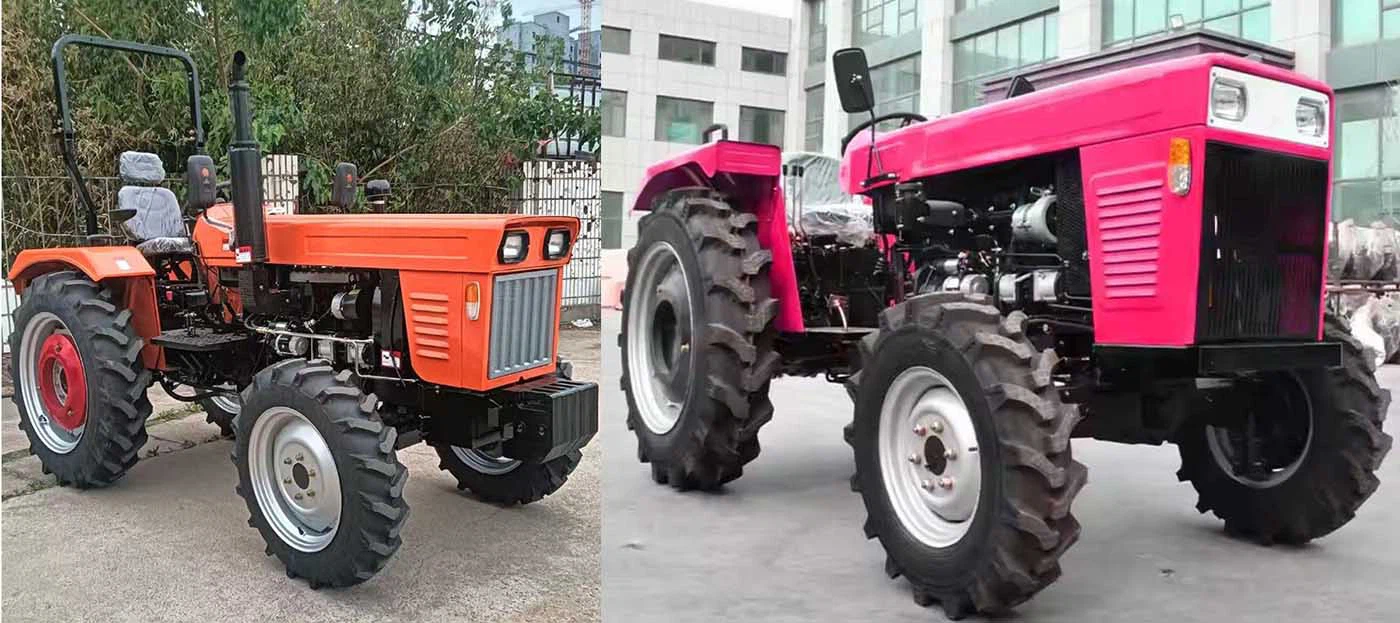
Value Without Compromising Quality
European tractors are renowned for precision but come with premium prices (€50,000+ for mid-range models). Chinese alternatives offer 20–30% lower upfront costs, with comparable reliability-a lifeline for small farmers facing rising input costs.
Total Cost of Ownership: Lower maintenance costs (thanks to widely available parts via European-based dealers) and fuel efficiency (some models report 15% better mileage than European equivalents) add to the appeal.
Warranty and Service: Brands like SDF Group (which owns Chinese-Italian joint venture Arbos) now offer 3-year warranties and local service centers in Germany, Poland, and Spain, addressing fears of poor after-sales support.
Green Tech for Sustainable Farming
Europe's push for "net-zero agriculture" has opened doors for Chinese innovation in electric and hybrid tractors:
Electric models: The Chinese firm AGCO (in partnership with a Chinese EV specialist) launched the "e-Tractor 30" in 2024-a 30hp electric tractor with a 12-hour battery life, perfect for small organic farms in the Netherlands or Belgium, where noise and emissions restrictions are strict.
Precision farming integration: Chinese tractors now come with GPS and IoT connectivity (compatible with European farm management software like Agworld), enabling variable-rate seeding and automated steering-key for EU-funded "smart farming" projects.
Case Studies: Winning Over Skeptics
Poland: A Fast-Growing Market
Poland, with its 1.5 million small farms, has become a hub for Chinese tractors. In 2023, YTO's market share in Poland hit 8% (up from 1% in 2018), driven by its 40–70hp models. Farmer Wojciech Nowak in Mazovia region explained: "I was hesitant, but after 2 years, my YTO tractor has outlasted the European one I had before. Parts are cheaper, and the dealer in Warsaw responds in 24 hours."

Italy: Vineyards and Orchards
Italian farmers, known for demanding equipment, now favor compact Chinese tractors for vineyard work. The Lovol 554, with its low profile and adjustable wheel width, is a hit in Tuscany. "It's as precise as my old Fendt but costs half," said vineyard owner Marco Rossi.
Scandinavia: Cold-Weather Adaptability
Chinese manufacturers have adapted tractors for Nordic winters-adding heated cabins, cold-weather batteries, and anti-freeze hydraulic systems. In Sweden, the YTO 704 is gaining traction among dairy farmers, who praise its reliability in sub-zero temperatures.
Challenges and the Road Ahead
Despite progress, hurdles remain:
Brand Perception: Older European farmers still associate "Chinese" with inferior quality, though younger farmers (under 40) are more open to testing new brands.
Local Competition: European giants are responding with budget lines (e.g., New Holland's "Workmaster" series) to counter Chinese value.
Yet, the trend is clear. With ongoing investments in R&D (Chinese tractor firms now spend 5–7% of revenue on innovation, up from 2% a decade ago) and a focus on European-specific needs, Chinese manufacturers are no longer outsiders-they're credible contenders.
Conclusion: A New Era of Agricultural Collaboration
European farms "falling in love" with Chinese tractors isn't just about machinery-it's a story of globalization done right: adapting to local needs, respecting standards, and offering real value. As one German farmer put it: "At the end of the day, I don't care where my tractor is made. I care if it works, saves me money, and helps me feed people. Right now, the Chinese ones are checking all those boxes."
For Chinese manufacturers, this is more than a market win-it's a validation of their journey from "copycat" to "innovator," and a sign that in agriculture, quality and adaptability speak louder than nationality.


