

Penetration of Electric Tractors (2026)
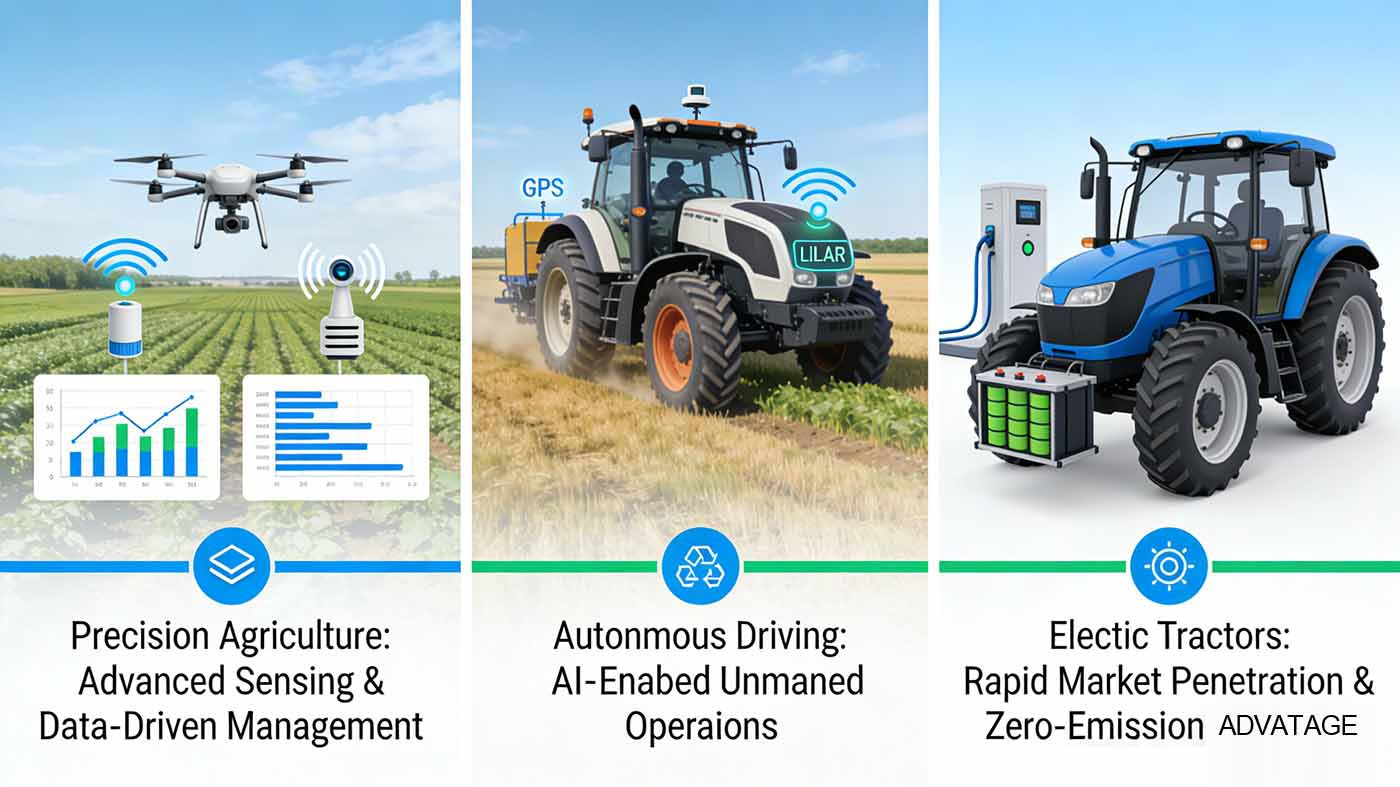
Against the backdrop of global farm labor shortages, carbon neutrality mandates, and digital agriculture transformation, overseas agricultural machinery in 2026 is undergoing a profound technological revolution. Three core trends-precision agriculture deep integration, autonomous driving large-scale commercialization, and electric tractor accelerated penetration-are reshaping the global agricultural equipment landscape, driving the industry toward efficiency, sustainability, and intelligence.
1. Precision Agriculture: From Concept to Full-Scale Farm Deployment (Core: Data-Driven, Variable Precision)
Precision agriculture has evolved from partial application to full-field, full-cycle integration, becoming the standard for high-end overseas agricultural machinery.
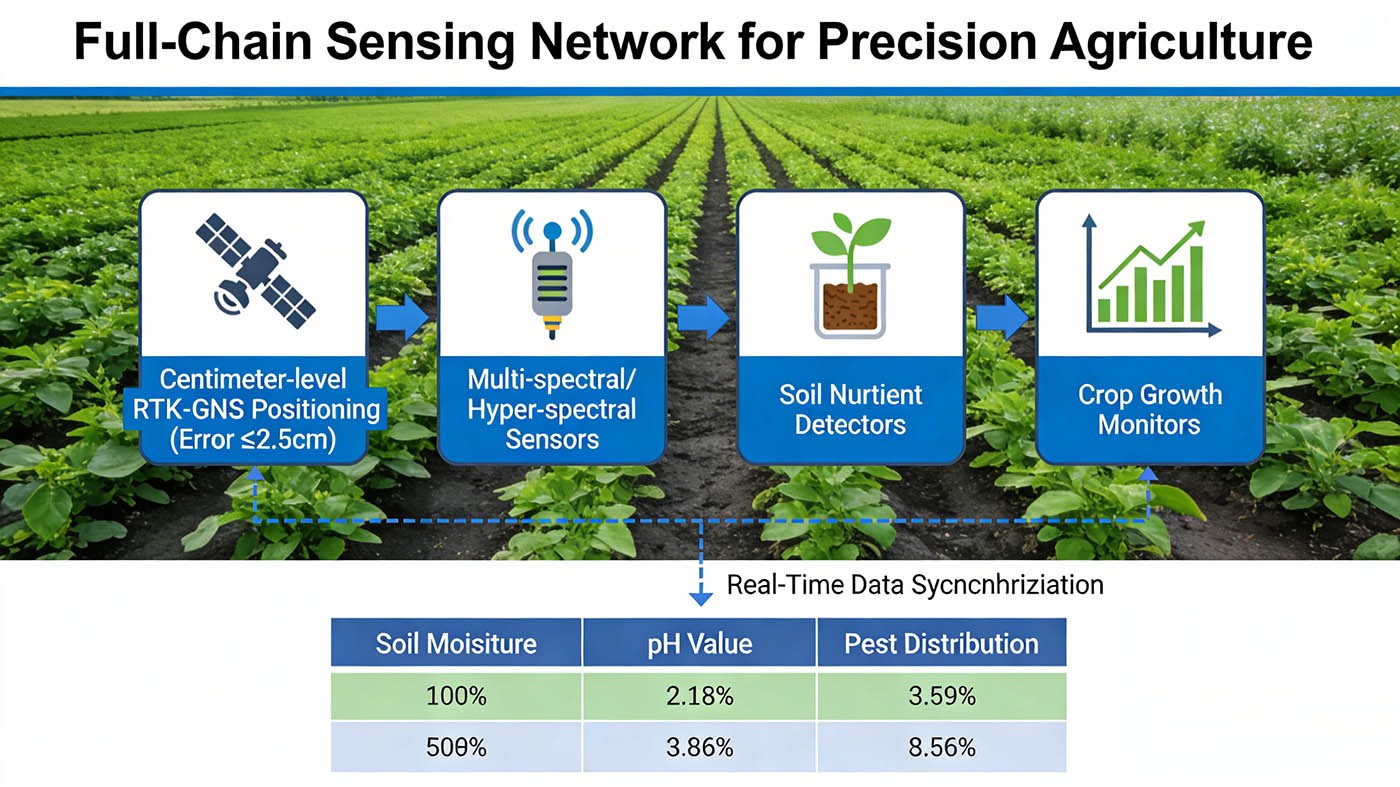
Technical System Upgrade: Centimeter-level RTK-GNSS positioning (error ≤2.5cm), multi-spectral/hyper-spectral sensors, soil nutrient detectors, and crop growth monitors form a full-chain sensing network, synchronizing data such as soil moisture, pH, and pest distribution in real time.
Core Application: Variable-Rate Technology (VRT): AI algorithms dynamically adjust seeding density, fertilization, and pesticide spraying. For example, John Deere's SenseApply sprayer and CNH's spot-spray system reduce herbicide use by up to 90% and fertilizer waste by ~22%, boosting yields by 15–20%.
Digital Platform & Data Monetization: Brands like John Deere Operations Center and AGCO FendtONE build cloud-based farm management systems, turning machinery into mobile data terminals. Farmers access real-time analytics, remote monitoring, and OTA updates-shifting the industry from hardware sales to data services.
Market Performance: Global precision agriculture equipment exceeds $300 billion in 2026; penetration in North America/Europe reaches 70%, and 40–50% in large farms in South America/Asia-Pacific.
2. Autonomous Driving: From "Driver-Assisted" to "Driver-Optional" Unmanned Operations (Core: AI Perception, Full Autonomy)
Autonomous agricultural machinery has moved from laboratory testing to large-scale commercial use, with overseas markets entering the "unmanned farming" era.
Technical Breakthroughs: High-level autonomous tractors (L2–L4) use 360° stereo cameras, LiDAR, and NVIDIA AI chips to achieve 24-hour unmanned tillage, sowing, and harvesting with real-time obstacle avoidance at 12 mph.
Flagship Products & Penetration:
John Deere 8R/9RX series: "Driver-optional" autonomous kit, compatible with retrofits for post-2020 models.
AGCO PTX Trimble OutRun: Cross-brand compatible autonomous fleet operation system.
Global penetration of L2+ autonomous tractors surpasses 30% in 2026; >64% of large commercial farms (>1,000 acres) use autonomous equipment.
Efficiency & Economic Value: Unmanned tractors improve operational efficiency by 35–42%, cut labor costs by ~30%, reduce overlaps by 15%, and lower fuel consumption by 18%.
Market Scale: Global autonomous tractor market hits ~$2.42 billion in 2026, growing at 12.66–14.6% CAGR; North America/Europe lead, with fastest growth in Asia-Pacific.
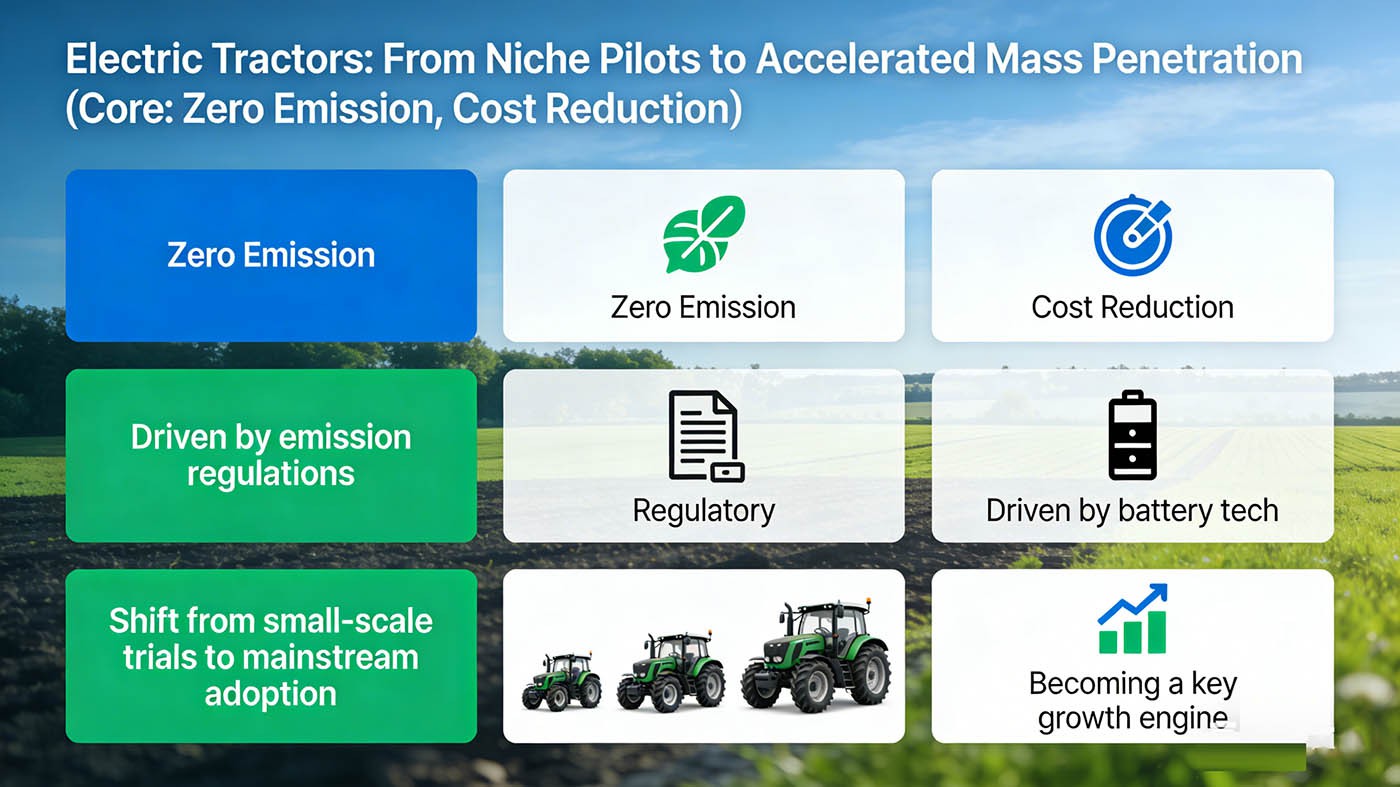
3. Electric Tractors: From Niche Pilots to Accelerated Mass Penetration (Core: Zero Emission, Cost Reduction)
Driven by emission regulations and battery tech, electric tractors shift from small-scale trials to mainstream adoption, becoming a key growth engine.
Power Structure Diversification:
Pure Electric: Dominates small/light scenarios (orchards, greenhouses). Fendt e100 Vario, Monarch Tractor: 8–12 hours runtime per charge, 100HP models till 50 acres per full charge.
Hybrid (Diesel-Electric): Addresses heavy-load, long-endurance demand. Fuel efficiency +20–30%, emissions -40–60%; mainstream for mid-to-high horsepower in 2026.
Hydrogen Fuel Cell: Prototypes field-testing in Europe/North America for ultra-long endurance.
Cost & Policy Drivers: Electric operation costs 60% lower than diesel; EU Green Deal, US USDA subsidies, and carbon taxes accelerate uptake.
Market Penetration & Scale: Global electric tractor market reaches ~$9.5 billion in 2026; >60% of new models offer electric/hybrid options. Europe/North America >35% penetration; Asia-Pacific/South America growing at >40% CAGR.
Regional Differences in Trend Adoption (2026)
North America/Europe: Mature, high-end-prioritize full autonomous driving, high-power electric/hybrid, precision big data; strict emissions drive rapid electrification.
South America (Brazil/Argentina): Fast growth-demand cost-effective mid-horsepower autonomous + hybrid; mechanization subsidies boost electric adoption.
Asia-Pacific (Australia/Japan/Korea): Differentiated-Australia favors large autonomous/electric; Japan/Korea focus on compact electric for small farms.
Africa/Middle East: Early stage-prioritize affordable semi-autonomous + hybrid for durability and low fuel reliance.


