

Small, medium, and large transport tractors are mainly classified by engine power, and there are slight differences in the power division standards in different scenarios.
They vary significantly in terms of structural design, transportation capacity, applicable scenarios, and supporting safety and emission configurations.
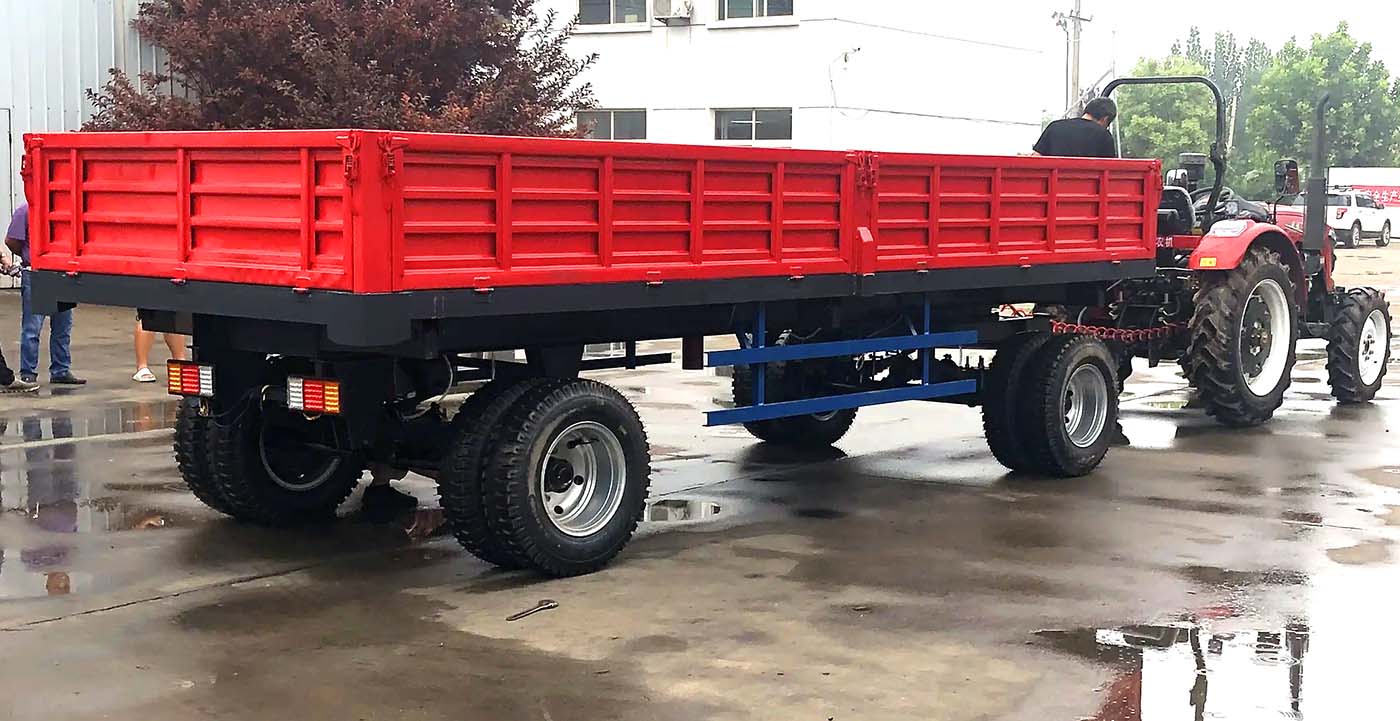
Small transport tractors
Power division: Generally, the power is below 20 horsepower (≤14.7 kW), and some standards also classify tractors with 20 - 50 horsepower into the small category. They are compact in size and light in weight, which makes them flexible to operate.
Structural and performance features: Most of them are wheeled or walking - type. The wheeled models have simple transmission structures, and the walking - type ones are usually equipped with simple steering handles instead of cabs.
Their maximum transportation load is generally within 1 - 3 tons, and the maximum driving speed is about 20 - 30 km/h. They have low fuel consumption and simple maintenance.
Applicable scenarios: They are mainly used for short - distance light transport tasks in small - scale farms, orchards, greenhouses, and rural villages. For example, transporting fertilizers, pesticides, and small batches of fruits and vegetables in orchards, or transporting seeds and tools in small plots. In China, many walking - type small transport tractors are also used for short - distance transportation between villages and towns.
Key standards: In China, they comply with GB 18447.2, which emphasizes the safety of steering components and traction connections. In the EU and the US, they focus on basic protective measures and low - emission requirements, such as installing simple protective covers for rotating parts and meeting the emission limits of small non - road machinery.
Medium transport tractors
Power division: The power is usually between 20 - 100 horsepower (14.7 - 73.5 kW). This power range enables them to balance transportation capacity and flexibility, and they are the most widely used type in agricultural transportation.
Structural and performance features: Most are wheeled, and some are equipped with simple cabs to protect operators from wind and rain. The transmission system is more stable, and most of them support four - wheel drive to improve passability on muddy roads. The transportation load is 3 - 8 tons, and the driving speed can reach 30 - 50 km/h. They can be matched with medium - sized trailers and have strong compatibility with agricultural tools.

Applicable scenarios: They are suitable for medium - scale farms and regional agricultural product transportation. For example, transporting harvested grain from fields to drying yards, or transporting feed between medium - sized breeding bases and storage warehouses.
They can also tow medium - sized agricultural machinery while undertaking transportation tasks, realizing the integration of farming and transportation.
Key standards: In the EU, they need to meet the basic safety requirements of (EU) No 167/2013, such as being equipped with roll - over protective structures (ROPS) and reliable braking systems. In China, they comply with GB 18447.1 and GB 16151.1 - 2008, which regulate the strength of the body frame and the limit of transport unit dimensions. The emission standards usually meet China's Non - road Stage III/IV or EU Stage V.
Large transport tractors
Power division: The power is above 100 horsepower (≥73.5 kW), and some heavy - duty models can even reach 200 - 300 horsepower. They have strong power reserves to cope with heavy - load transportation and complex road conditions.
Structural and performance features: They are mostly large - sized wheeled tractors with full - enclosed cabs, which are equipped with air conditioning, shock - absorbing seats and other comfort configurations. The chassis and frame are reinforced to withstand heavy loads, and the braking system adopts dual - circuit design to ensure safety during high - load braking.
The transportation load can reach 8 - 20 tons, and the driving speed can exceed 50 km/h.
Some models are also equipped with CVT gearboxes to improve fuel efficiency during heavy - load operation.
Applicable scenarios: They are mainly used for large - scale commercial agricultural operations and long - distance heavy - duty transportation.

For example, transporting large quantities of grain, forage, and agricultural machinery in large - scale farms, or towing semi - trailers to transport agricultural products between production areas and processing plants.
They can also be used in conjunction with large agricultural machinery such as combined harvesters to undertake supporting transportation tasks during large - area harvesting.
Key standards: The safety requirements are extremely strict. In the EU and the US, ROPS and falling - object protective structures (FOPS) must pass high - intensity impact tests. In the US, they need to comply with the braking distance requirements of 49 CFR Part 571.
In China, they need to meet higher noise and emission standards, with the driver's cab noise controlled within the limit of GB 6376, and emissions complying with the latest non - road diesel engine standards.
In addition, the connection dimensions with trailers must meet unified standards to ensure compatibility with heavy - duty trailers.


