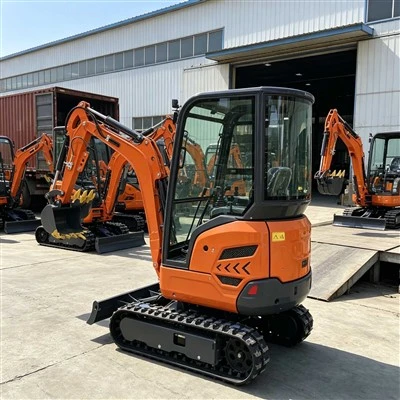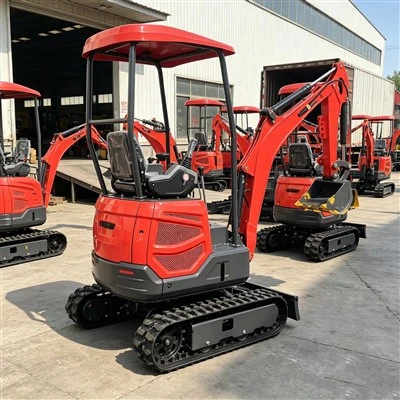
The working conditions of industrial tractor PTO are mostly heavy load impact, erosion by sand, gravel, mud and water, and long-term operation with pumps/winches/crushing equipment. Compared with agricultural PTO, the failure rate is higher. The core faults are divided into six categories: abnormal noise, weak power, inability to rotate, jamming and fracture, oil leakage, and clutch failure:
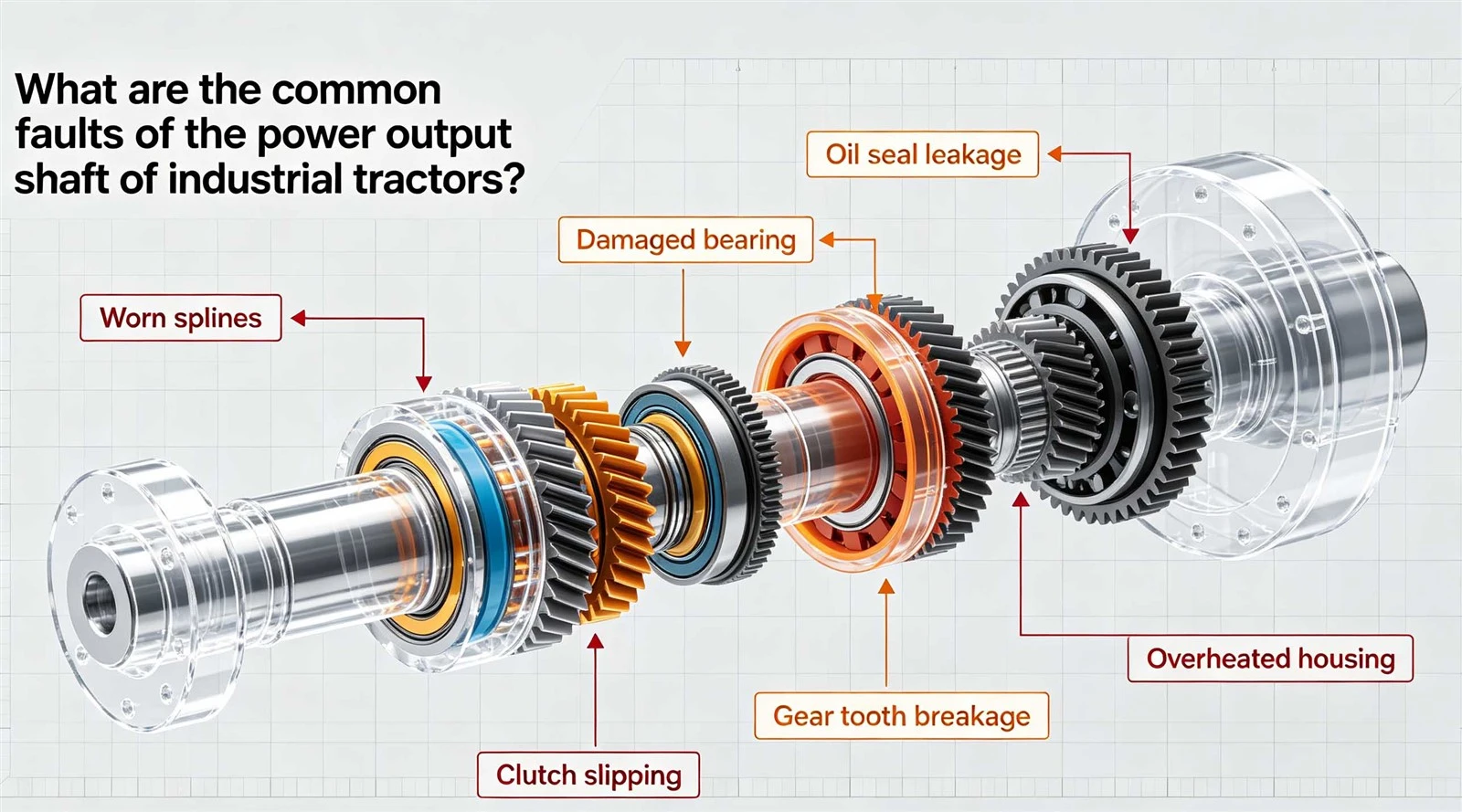
PTO does not rotate at all, no power output
PTO clutch mechanism damaged
Wear of independent clutch shift fork, detachment of shift fork shaft, burning of clutch friction plate, and breakage of compression spring; Pull the control handle, but the internal gears cannot mesh, and the shaft body idles without moving.
Power take-off gear teeth breakage/tooth breakage
Long term overloading, tool jamming, forced starting, broken teeth of PTO meshing gears inside the gearbox, and inability to transmit power.
Wear and tooth loss of output shaft spline
The external spline of the shaft head is severely worn flat, and after connecting to the drive shaft, it slips and the machine does not work.
Linkage PTO rear axle transmission failure
This type of PTO is bound to the walking system, and when the rear axle differential and half axle are damaged, the wheels and PTO cannot rotate together.
PTO can rotate, but the power is weak and the slip belt cannot move the load
PTO clutch plate wear and thinning
Insufficient clamping force, friction and slippage occur when carrying heavy loads such as water pumps and winches, and the speed drops significantly, accompanied by a burnt and odorous smell.
Cut the safety pin. Cut it
Industrial PTOs are often equipped with overload protection pins, which can cause the pin to break when the machine is stuck, resulting in the transmission shaft rotating but the rear end machine having no power, which is a protective fault.
Excessive spline clearance and loose fit
The clearance between the shaft and the transmission shaft sleeve is too large, resulting in torque loss during transmission and obvious weakness under heavy loads.
Abnormal noises during operation (buzzing, impact, metal clicking)
Bearing damage (most frequent)
The PTO output end supports bearing oil shortage, water ingress and sedimentation, ball point corrosion and loose frame, continuous buzzing noise during idling, and rapid temperature rise.
Abnormal gear mesh clearance
Gear wear and loose bearings cause gear misalignment, resulting in periodic impact noise during meshing.
Unbalanced transmission shaft and stuck universal joint
The external transmission shaft is bent, the cross shaft is short of oil and rusted, there is high-speed rotation shaking and abnormal noise, and even the PTO housing is cracked.
Loose fixing bolts
The PTO flange and end cap fastening screws are loose, causing the housing to shake and make abnormal noises during operation.
The output shaft is stuck and unable to rotate, forcing the start of easily damaged components
The foreign object in the machine is stuck and not separated
The external winch and crushing equipment are stuck, and the PTO is forcibly engaged without shifting, directly locking the output shaft.
bearing seizure
After the infiltration of mud and water, the bearings rust and lack oil, the raceway gets stuck, and the shaft cannot rotate at all.
Gear fragments get stuck in the meshing tooth gap
Internal broken teeth and debris get stuck between gears, mechanically locking the PTO transmission.
Axis deformation, bending, and fracture
Heavy load and unbalanced load force
Lateral dragging of machinery, unilateral force, bending of output shaft due to bending moment, and severe shaking during rotation.
Instantaneous impact overload fracture
The hoist suddenly pulls heavy objects, the crusher gets stuck, the torque exceeds the designed load of the shaft, and the PTO shaft breaks directly from the root or neck of the spline.
Fatigue cracking
Long term high-frequency start stop alternating load caused cracks in the shaft body, which eventually led to complete fracture.

PTO end cap oil seal leakage
Aging of skeleton oil seal and lip wear
The oil seal rubber is hardened and damaged, and lubricating oil leaks along the shaft seam, causing a continuous decrease in transmission oil volume.
The journal is worn and grooved
Long term friction will cause grooves on the surface of the shaft, making it impossible for the oil seal to seal, and replacing the oil seal will continue to leak oil.
The ventilation hole is blocked and the pressure inside the box is too high
The transmission respirator is blocked, and the internal oil pressure is causing the oil seal to open and leak oil.
Installation eccentricity
The transmission shaft is not installed properly, resulting in large radial runout of the shaft and unilateral wear and leakage of the acceleration oil seal.
Operation and gear control malfunction
The joystick is stuck and unable to engage/disengage the PTO gear
The fork shaft is corroded, the limit spring is detached, and the pull rod is deformed, making it difficult to smoothly combine or separate the power.
Shift and jump gears
The positioning steel ball and spring failed, causing the PTO gear to disengage on its own during operation, resulting in a power interruption midway.
Corrosion caused by water ingress (high incidence of outdoor operations on construction sites)
Rainwater and mud enter the PTO housing through the gap of the transmission shaft, causing the lubricating oil to emulsify and deteriorate
Rapid corrosion and damage of bearings;

Gear rusting, pitting, and increased wear;
The internal friction plate is damp and stuck, and the clutch cannot be completely separated.
High incidence of faults unique to industrial models (different from agricultural tractors)
Due to frequent driving of winches, air compressors, and crushing equipment, instantaneous overload and breakage of safety pins and PTO shafts are much more common than in agricultural models;
Most of them are front/side mounted PTOs with simple protective structures, which are prone to dust and water ingress. The failure rate of oil seals and bearings is higher;
Poor matching of non-standard splines, non concentric external equipment, large shaking, and doubled wear rate of oil seals and shafts;
A large number of models do not have independent PTO clutch and rely on walking power linkage. Rear axle failure will directly lead to PTO failure.
Email : sales@szleadray.com