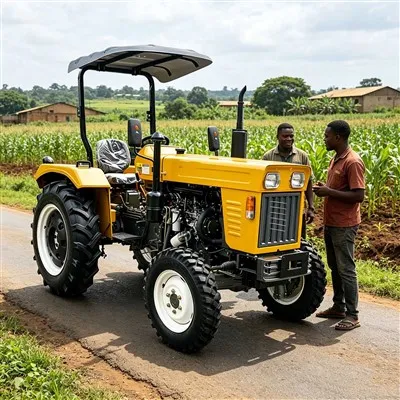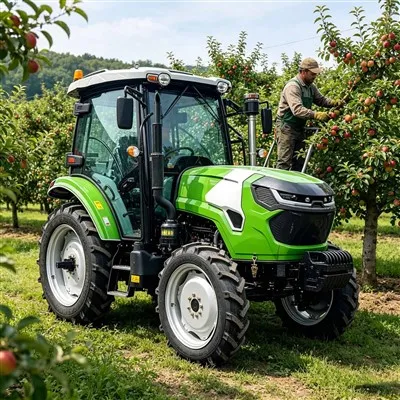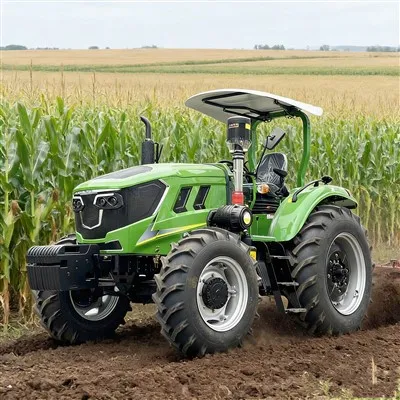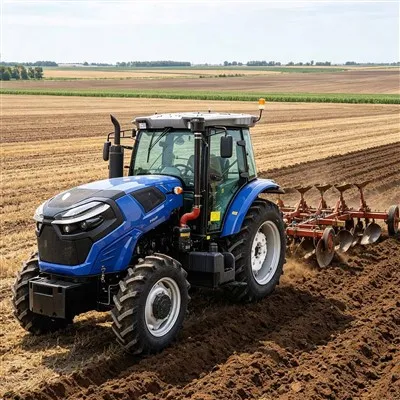
The tractor market in Southeast Asia is experiencing steady and robust growth, driven by multiple factors such as agricultural modernization, labor shortages, and policy support. Below are the key trends in detail:
1. Steady Market Growth with Clear Expansion Trajectory
The Southeast Asia agricultural tractor market is on an upward trend with remarkable growth momentum. Specifically, the market size reached USD 3.20 billion in 2025 and is projected to grow at a CAGR of 5.4% to reach USD 4.16 billion by 2030. In terms of unit sales, the market had 101,356 units in 2024 and is expected to reach 119,536 units by 2030 with a CAGR of 2.79%. This growth is closely linked to the region's increasing demand for food production, the push for agricultural mechanization, and the need to replace manual labor.

2. Dominant Demand for Mid-Horsepower Tractors
The 12-to-99 HP range is the core segment of the market, accounting for 58.20% of the market size in 2024 and continuing to dominate demand. Among them, the 46–75 HP band held 41% of the Vietnam tractor market share in 2024, reflecting strong demand for mid-horsepower models (such as 50HP and 60HP) that are suitable for small-to-medium plantations and diverse farming tasks in the region. Additionally, tractors in the 100–175 HP band are projected to grow at the fastest rate (10.5% CAGR) through 2030, catering to the needs of large-scale commercial farming.
3. Rising Trend of Green and Low-Carbon Propulsion
With the promotion of ASEAN carbon-credit schemes and increasing awareness of environmental protection, the electrification of tractors (especially in the 20–75 HP class) is accelerating. Alternative fuel tractors (such as CNG, compressed biogas-powered models) are also gaining traction, as they reduce fossil fuel dependence and operational costs while meeting environmental requirements.
Currently, diesel engines still dominate the market (accounting for 93% of Vietnam's tractor market in 2024), but electric and hybrid models are gradually emerging as a long-term growth trend.
4. Policy Support and Improved Accessibility
Governments across Southeast Asia are actively promoting agricultural mechanization through subsidies, low-interest loans, and training programs. For example, Indonesia's "Million Tractors Program" and Vietnam's agricultural modernization initiatives lower the ownership barrier for farmers.
Meanwhile, rural leasing platforms and micro-lending programs enable smallholders to access tractors without bearing full purchase costs, further boosting market penetration.
5. Regional Market Differentiation and Concentration
Geographic Focus: Indonesia held the largest market share (34.2%) in 2025, while Vietnam is projected to grow the fastest with an 11.4% CAGR from 2025 to 2030. Thailand, as a major agricultural country, has a market size of USD 3.5 billion in 2025 and is expected to reach USD 4.90 billion by 2034 with a 3.80% CAGR.
Market Concentration: Strategic partnerships are intensifying market concentration, such as AGCO's 2025 alliance with SDF to strengthen its position in the low-mid horsepower segment. The market is dominated by international giants (e.g., John Deere, Siam Kubota) and local enterprises, with localized production and after-sales support becoming key competitive factors.

6. Integration of Precision Farming Technologies
The adoption of precision farming technologies (e.g., GPS-guided tractors, sensor-based systems) is driving demand for technologically advanced tractors. Farmers are increasingly favoring tractors equipped with smart features to improve operational efficiency, reduce resource waste, and meet export quality requirements for crops like rice, coffee, and rubber.
7. Adaptation to Local Agricultural Conditions
Tractors tailored to Southeast Asia's tropical climate and terrain are in high demand. Features such as heat and humidity resistance, high-grip tires for muddy fields, and narrow wheelbases for plantation rows are becoming standard, as they address the region's unique challenges (e.g., volcanic soil, sloping fields, dense crop rows).