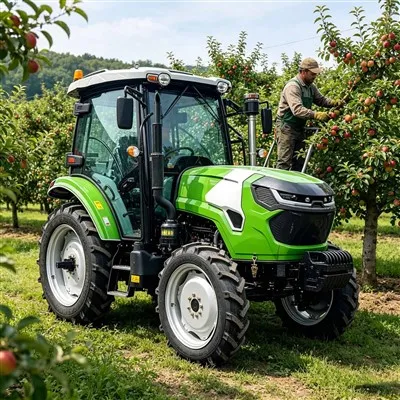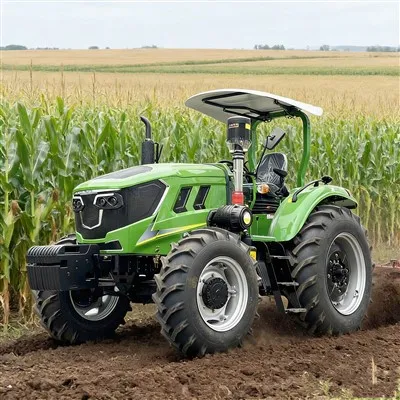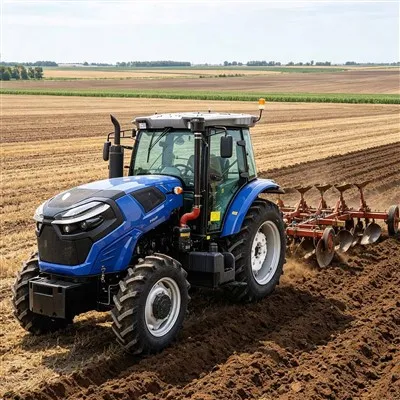
Using wheeled tractors with rear-mounted agricultural tools requires focusing on safe connection, parameter matching, and standardized operation to ensure efficient and stable field work.
1. Pre-operation connection & inspection
Standardized connection: Align the tractor's three-point suspension with the implement's connecting frame. Insert the upper and lower pins firmly and lock the safety clips to prevent detachment during operation. Connect hydraulic hoses (for hydraulic implements) correctly, ensuring no leakage.
Power matching check: Confirm tractor horsepower matches the implement (e.g., 30-50HP for small rotary tillers, 80+HP for large reversible plows). Avoid overloading to prevent engine overheating or component damage.Implement debugging: Calibrate working parameters (plowing depth, seeding density, spray pressure) according to operation needs. Check moving parts (blades, seeding wheels, nozzles) for flexibility and remove debris or obstacles.

2. Safe operation norms
Start-up & warm-up: Start the tractor and let the engine idle for 3-5 minutes. Operate the hydraulic system to lift and lower the implement 2-3 times to test flexibility before moving to the field.
Field operation safety: Keep the implement lifted when driving on roads or turning. Lower it slowly after reaching the operation area, and avoid sudden lifting/lowering to prevent soil accumulation or crop damage. Maintain a safe distance from bystanders, especially during high-speed rotating operations (e.g., rotary tilling).
Abnormal handling: Stop the tractor immediately if the implement makes abnormal noises, vibrates excessively, or gets stuck. Shut down the engine before inspecting or clearing obstacles to avoid accidental injury.

3. Operation parameter control
Speed adjustment: Adapt speed to the implement and soil conditions. For soil preparation (plowing, rotary tilling), keep speed at 3-6km/h; for sowing/fertilizing, maintain 4-8km/h to ensure uniformity. Reduce speed on uneven terrain to avoid implement damage.
Depth/height control: Use the tractor's hydraulic lifting system to adjust implement height. Plowing depth is generally 15-30cm (adjust by soil type), sowing depth 2-5cm (based on seed size), and spray nozzle height 15-30cm above crops (for sprayers).
Route planning: Adopt linear or circular operation routes in large fields to reduce turning times. Use Beidou/GPS navigation if available to avoid overlapping or missing operation areas.

4. Post-operation maintenance
Implement cleaning: Remove residual soil, straw, or seeds from the implement. Rinse sprayers with clean water to prevent corrosion; dry rotating parts to avoid rust.
Tractor & implement separation: Park on flat ground, turn off the engine, and relieve hydraulic pressure before detaching the implement. Store the implement in a dry, ventilated place and support it with brackets to avoid deformation.
Routine maintenance: Check for wear on pins, hoses, and blades; replace damaged parts in time. Lubricate rotating joints (e.g., plow shafts, seeder bearings) to extend service life.