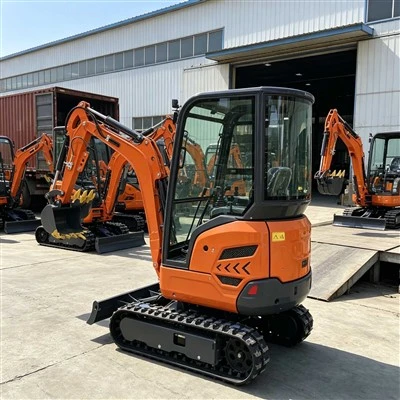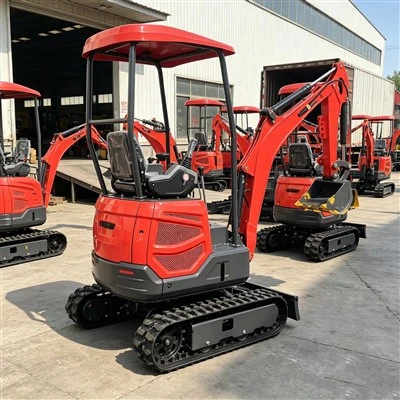
The evolution of agricultural machinery is essentially a history of transformation from "steel tools" to "intelligent systems." In the past, the core competitiveness of agricultural machinery focused on hardware parameters such as horsepower and durability, a competition of raw manufacturing strength.
Today, with the deep penetration of digital and intelligent technologies, the synergistic integration of software and hardware has become key to breaking through industry barriers. "Software-hardware integration" is reshaping the value logic of the agricultural machinery industry, propelling agricultural production into a new stage of precision, efficiency, and ecological sustainability.
The traditional agricultural machinery industry has long been trapped in a development bottleneck of "emphasizing hardware while neglecting ecology." In the era of mechanical hydraulics, the functions of equipment such as tractors and harvesters relied entirely on physical structures, with control logic and actuators rigidly coupled.
Optimizing operating modes required modifying mechanical components, resulting in high upgrade costs and poor flexibility. At that time, competition among companies focused on single indicators such as engine power and operating efficiency, leading to severe product homogenization and a vicious cycle of low-price competition.

The development needs of modern agriculture have become the core driving force behind the "software-hardware integration" transformation. On the one hand, my country's agriculture faces real challenges such as fragmented land plots, diverse planting patterns, and labor shortages.
Simply relying on hardware upgrades is no longer sufficient to meet the demands of precision farming and cost reduction.
On the other hand, the development trends of large-scale planting and green agriculture require agricultural machinery to not only perform basic tasks like planting, cultivating, managing, and harvesting, but also possess complex capabilities such as data collection, intelligent decision-making, and resource optimization.
This demand is forcing the industry to shift from a "product-centric" to an "ecological" approach, combining the flexibility of software with the rigidity of hardware, transforming agricultural machinery from isolated field tools into intelligent terminals that connect the entire industry chain.
At the hardware level, traditional mechanical structures are upgrading to "intelligent hardware." New energy sources are becoming an important vehicle, with electric tractors and electric rice transplanters becoming increasingly common.
This not only reduces operating costs and noise pollution-for example, one company reduced the noise level of its electric rice transplanters from 105 decibels to 75 decibels, and lowered the incidence of occupational diseases among operators by 50%-but also provides a foundation for software control through digital interfaces on motors and battery packs.
Meanwhile, the integrated application of multi-source sensors has given agricultural machinery "senses." Devices such as visual cameras, radar, and BeiDou positioning modules enable agricultural machinery to accurately perceive information such as soil moisture, crop growth, and the operating environment, providing data support for intelligent decision-making.
Software has become the core engine of value creation, defining the core capabilities of agricultural machinery. Autonomous driving systems have achieved a leap in operational precision; intelligent seeders equipped with BeiDou navigation achieve an operational accuracy of ±2.5 cm.
Deere's "See & Spray" system dynamically controls nozzle switching through AI algorithms, reducing herbicide use by 66%. Energy management software continuously optimizes the range of electric agricultural machinery; some electric tractors have a range of up to 12 hours, and with fast charging technology, 80% of the power can be replenished in one hour.
The widespread adoption of "agricultural machinery management" apps allows farmers to monitor operating area, energy consumption, and fault warnings in real time, achieving efficient services such as "reporting faults immediately and delivering parts immediately."
More importantly, the iterative nature of software allows agricultural machinery to become "smarter with use." Over-the-air (OTA) remote upgrades allow for continuous algorithm optimization and new feature additions without requiring hardware replacement.

With continuous technological iteration and sustained policy support, "hardware-software integration" will become standard in modern agricultural machinery, propelling agricultural modernization into a new stage.
At the technological level, the combination of AI big data models and agricultural machinery will achieve a leap from "perceptual intelligence" to "cognitive intelligence," enabling machinery to autonomously understand agronomic requirements, adapt to complex terrain environments, and optimize planting plans.
At the application level, "digital twin" technology will construct virtual farmland models, enabling simulated optimization and remote control of agricultural machinery operations.
At the industry level, standardization will accelerate, and group standards for the "agricultural machinery ecosystem" are expected to be released, transforming experiences in new energy adaptation, logistics collaboration, and data interfaces into industry norms.
However, the transformation still faces challenges: the low-temperature performance and battery life of new energy agricultural machinery need further breakthroughs; the multimodal transport logistics system needs improvement; data security and privacy protection face challenges; and the cost of technological transformation for small and medium-sized enterprises is relatively high. This requires a concerted effort from the government, enterprises, and research institutions to overcome development bottlenecks through policy support, technological breakthroughs, and supply chain collaboration.

From "hardware as king" to "integrated hardware and software," the transformation of modern agricultural machinery is not merely a change in product form, but a restructuring of industrial logic.
This revolution is upgrading agricultural machinery from simply "getting the job done" to "getting the job smarter" and "providing excellent service," not only reducing agricultural production costs and improving efficiency, but also strengthening the "technological defense line" for national food security.
When intelligent agricultural machinery operates precisely in the fields, when data flows efficiently in the cloud, and when the entire supply chain achieves synergistic development, the ultimate goal of agricultural modernization-allowing farmers to cultivate easily and harvest efficiently-is gradually becoming a reality.
This is not only the path to upgrading the agricultural machinery industry, but also a crucial leap for Chinese agriculture from "following" to "leading."