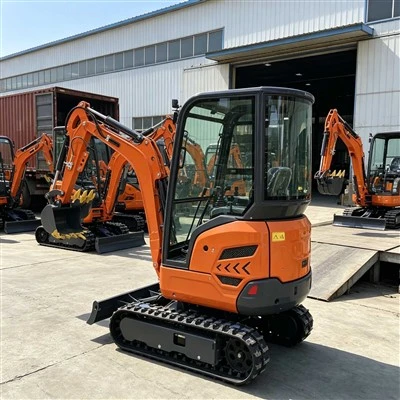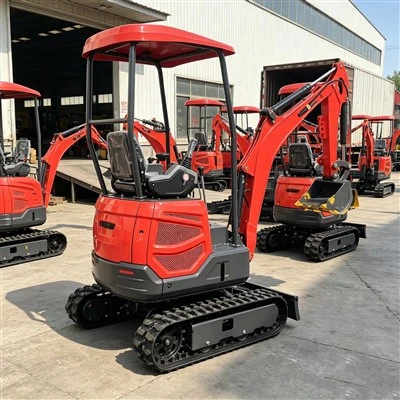
The agricultural tractor-matched trenching and ridging machine revolutionizes planting efficiency by addressing core pain points of traditional manual or low-efficiency operations-such as labor intensity, inconsistent quality, and long operation cycles. Its efficiency improvements are rooted in integrated functional design, mechanized precision, and adaptability to crop-specific needs, with concrete enhancements across four key dimensions:

1. Integrating Multiple Operations to Reduce Process Redundancy
Traditional planting of strawberries, scallions, ginger, and other ridge/trench-dependent crops requires separate manual or single-tool steps: plowing → soil preparation → trenching → ridging → (optional) film covering/hilling. The trenching and ridging machine streamlines these into a one-pass integrated workflow, eliminating redundant setup and transition time:
Example for strawberry planting: A single pass completes plowing (breaking compacted soil), ridging (forming 30-40cm high, flat-topped ridges), and film covering (via optional attachments). Manual operations would require 3-4 separate stages, while the machine finishes 0.3-0.5 mu per hour (equivalent to 8-10 manual workdays).
Example for ginger planting: The machine integrates deep plowing (15-20cm), deep trenching (30-40cm), and ridge shaping in one pass. Manual trenching alone takes 1 worker 1 day to complete 0.1 mu, but the machine handles 1-4 mu per hour-cutting the entire planting preparation time by 90%.
By combining 3-5 operations into a single pass, the machine reduces the total time spent on pre-planting soil preparation by 60-80% compared to traditional methods.
2. Mechanized Scale Operation Replaces Labor-Intensive Manual Work
Trenching, ridging, and hilling are labor-heavy tasks with low manual efficiency-especially for crops requiring precise, uniform trenches/ridges. The machine's mechanized design solves this by:
High hourly throughput: Small greenhouse models (matched with 12-20hp tractors) process 2-4 mu per hour; large-scale double-row open-field models (matched with 40-70hp tractors) reach 1500-2600 meters per hour (equivalent to 10-15 mu per hour for standard ridge spacing). This is 30-50 times more efficient than manual work (manual: ~0.1 mu per worker per day).
Reducing labor demand: A single machine replaces 16-20 manual workers. For a 100-mu strawberry field, manual trenching/ridging would require 20 workers working 5 days; the machine completes the job in 25-50 hours (2-3 days) with 1 operator-saving 98% of labor costs and shortening the planting window.

24/7 continuous operation: Unlike manual labor (limited by fatigue and working hours), the machine can operate continuously during peak planting seasons (e.g., spring/summer) when timely soil preparation is critical. This avoids delays caused by labor shortages, ensuring crops are planted within the optimal growth period.
3. Precision and Consistency Improve Survival Rate and Yield
Crops like strawberries (require well-drained ridges) and ginger (need deep, uniform trenches for hilling) are highly sensitive to the quality of trenches/ridges. Manual operations often result in inconsistent depth, width, and height-leading to uneven water/fertilizer distribution, poor drainage, and reduced crop survival. The machine's precision design solves this:
Uniform specifications: Trench depth (20-50cm), ridge height (20-40cm), and row spacing (25-180cm) are adjustable and controlled mechanically, with an error of ≤2cm. This ensures all plants receive consistent sunlight, water, and nutrients, reducing seedling mortality by 15-20% compared to manual planting.

Optimized soil structure: The machine's manganese steel cutters break soil evenly (no large clods) and mix base fertilizer uniformly during plowing. For scallions, deep, loose trenches promote root growth (increasing yield by 10-15%); for strawberries, well-compacted but porous ridges prevent waterlogging (reducing disease incidence by 20%).
Standardized planting conditions: Uniform trenches/ridges enable subsequent mechanized operations (e.g., seeding, transplanting, fertilizing) to be more efficient-creating a "chain reaction" of efficiency gains throughout the planting cycle.
4. Adaptability and Multifunctionality Reduce Downtime and Equipment Costs
The machine's design prioritizes versatility, allowing it to adapt to different crops, environments, and operation stages-minimizing downtime and the need for multiple single-function tools:
Crop adaptability: Adjustable parameters (trench depth/width, ridge height/spacing) suit strawberries (narrow, high ridges), scallions (deep trenches), ginger (wide trenches + hilling), sweet potatoes (broad ridges), and more. No need to switch machines for different crops.
Environment adaptability: Compact models (width 38-75cm, height 70-90cm) access greenhouses, narrow plots, and orchards where large machinery cannot operate; 4WD tractor matching enables stable operation on hilly, uneven terrain. This eliminates the need for manual work in hard-to-reach areas.

Multifunctional attachments: By replacing tools, the machine can switch between trenching, ridging, hilling, weeding, and film covering. For example, after planting ginger, the same machine can be used for mid-growth hilling-avoiding the cost of purchasing separate hilling equipment and reducing equipment idle time.
Low maintenance downtime: Key components (gearbox, bearings, cutters) are reinforced for durability, with a failure rate of <5% during peak seasons. Routine maintenance (e.g., lubrication, blade sharpening) takes <30 minutes per day, ensuring high equipment availability.
5. Low Operational Costs Extend Efficiency to Long-Term Cultivation
Efficiency is not just about speed-it also involves cost-effectiveness. The machine reduces long-term operational costs, further enhancing overall planting efficiency:
Low fuel consumption: Matched with diesel tractors, the machine consumes only 3-5 liters of diesel per hour. The cost per mu is 5-7 yuan-far lower than manual labor costs (≥100 yuan per mu) or multiple single-function tools (higher purchase/maintenance costs).
Long service life: High-quality materials (manganese steel cutters, reinforced gearboxes) ensure a service life of 5-8 years, with minimal replacement costs. This translates to sustained efficiency gains across multiple planting cycles.
Summary of Efficiency Improvements
| Aspect | Manual Operation | Trenching & Ridging Machine | Efficiency Gain |
|---|---|---|---|
| Hourly throughput | ~0.005 mu/hour (per worker) | 2-15 mu/hour | 30-50x |
| Labor demand (100 mu) | 20 workers × 5 days | 1 operator × 2-3 days | 98% labor saved |
| Operation cycle | 5-7 days | 2-3 days | 50-60% time saved |
| Trench/ridge error | ±5-8cm | ±≤2cm | 60-75% precision improvement |
| Crop survival rate | 75-80% | 90-95% | 15-20% increase |
In short, the agricultural tractor trenching and ridging machine improves planting efficiency by integrating processes, scaling output, ensuring precision, and reducing costs-addressing the core bottlenecks of traditional planting. It not only accelerates pre-planting operations but also lays the foundation for higher yields and more efficient subsequent management, making it a critical tool for modern small-to-large-scale crop cultivation.