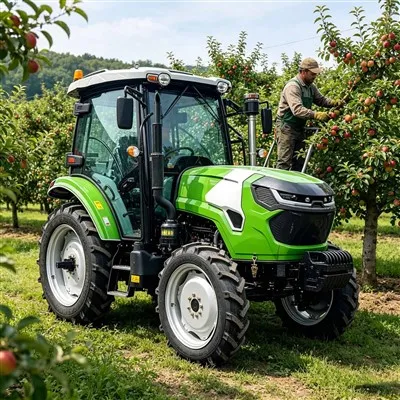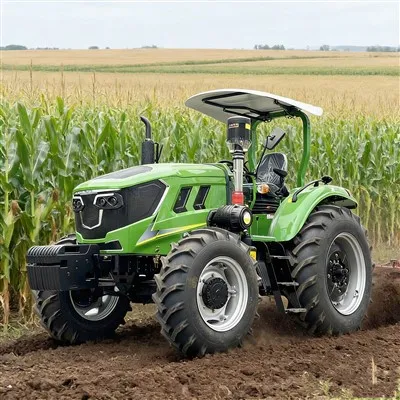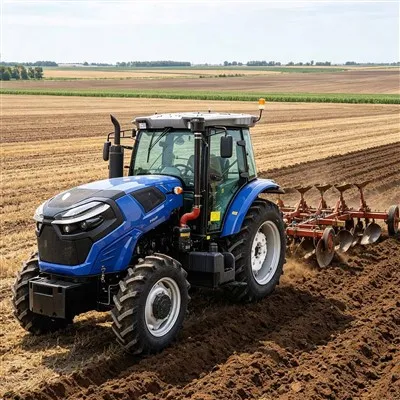
When operating in orchards, small tractors must balance tree protection, operational efficiency, and operator safety, while also adapting to the unique environment of narrow row spacing, dense plantings, and potentially complex terrain.
The following eight key areas require attention, covering the entire process from pre-operation preparation and process control to safety precautions:
1. Pre-operation: Preparing the "machine model and equipment" to suit the orchard environment
The core challenge of orchard operation is limited space.
Ensure that the tractor and implements are compatible with the orchard's dimensions to avoid damage to the trees:
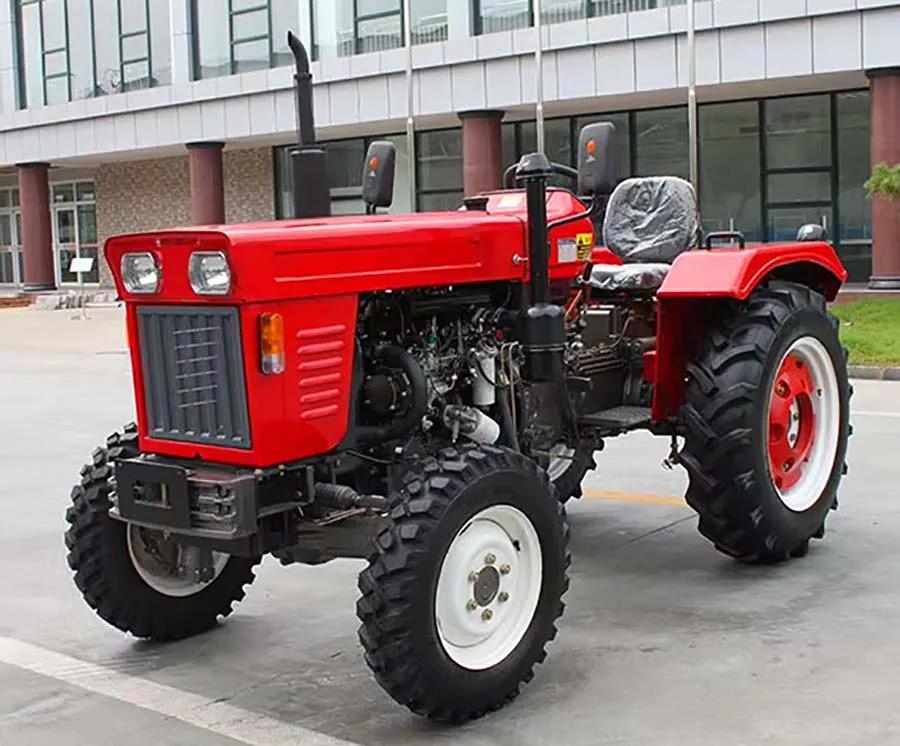
Preferably choose a "narrow body, short wheelbase" model.
Orchard row spacing is typically 2-4 meters (such as in apple and citrus orchards). Choose a compact tractor with an adjustable wheelbase (recommended minimum wheelbase ≤1.2 meters) and a body width ≤1.5 meters (such as the aforementioned Yanmar SA222-R and Kubota L2501) to avoid scraping against tree trunks when turning or driving straight.
If your orchard has a slope (such as a mountain orchard), prioritize a model with a low center of gravity to reduce the risk of rollover.
Also, ensure the tractor has a minimum ground clearance (recommended ≥25cm) to prevent scratches from raised rocks between ridges.
Use "orchard-specific agricultural tools" and avoid over-modification of general-purpose tools.
For tilling/weeding: Choose a narrow-width rotary tiller (1.2-1.8 meters wide) or an orchard weeder (with anti-entanglement guards).
Avoid damaging the fruit tree roots with a wide rotary blade (fruit tree roots are often located within the canopy projection, so the implement width should be 10-20cm smaller than the row spacing).
For fertilizing/pesticide spraying: Use a dedicated orchard fertilizer spreader (which allows for deep application close to the roots to avoid root damage) or a mounted, low-profile sprayer (with adjustable spray height to prevent scratches on branches and ensure even coverage of the undersides of leaves).
Transport: Use a low trailer (height ≤ 1.2 meters) to avoid collisions with branches when transporting fruit/fertilizer. If moving between rows of fruit trees, the trailer width must match the tractor's frame and not exceed the wheelbase.

During Operation: Key Operations for "Protecting Fruit Trees + Improving Efficiency"
Orchard operations require precise control of tractor trajectory and implement status to ensure the completion of the operation while avoiding irreversible damage to the fruit trees (trunks, roots, branches, and foliage).
Strictly control the driving trajectory to avoid "tree damage risk points."
When driving straight: Use the "center line between rows of fruit trees" as a reference point to ensure that the tractor's wheelbase aligns with the row spacing to avoid crushing the fruit tree roots (roots are concentrated 20-40 cm below the surface, and crushing can cause oxygen deprivation).
If the orchard has ridges, drive along the furrows between ridges, avoiding the ridges. When turning: Slow down in advance (speed ≤ 3 km/h) and take advantage of the small turning radius of small tractors (for example, the John Deere 3025E has a turning radius of approximately 2.5 meters) to prevent the rear wheels from swinging and scraping against tree trunks.
If the row spacing is too narrow, reverse turns can be used to reduce the impact of the tractor on branches.
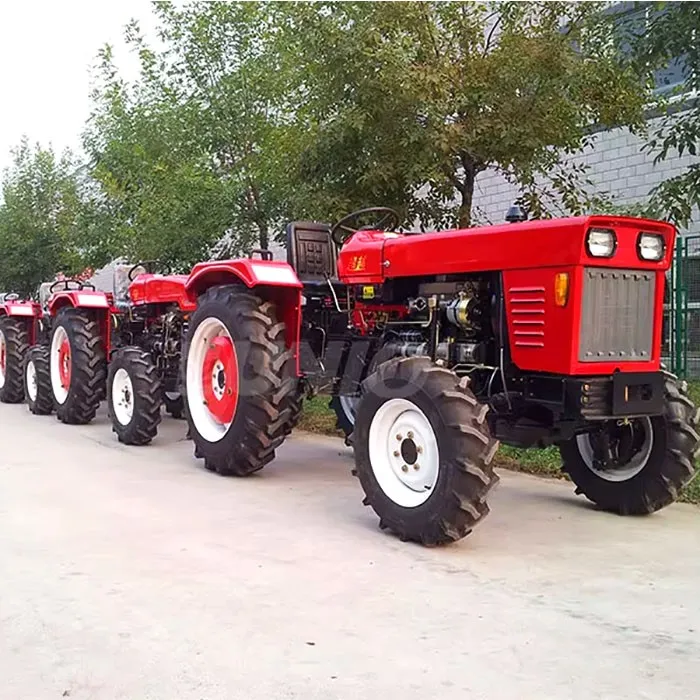
Working on slopes: When the slope is >15°, driving longitudinally is strictly prohibited (as it can easily overturn). Drive transversely instead.
Also, reduce speed to prevent implements (such as rotary tillers) from digging unevenly into the soil due to the slope, potentially damaging the roots of fruit trees on one side.
Precisely adjust implement parameters to avoid overworking.
Cultivating/rotary tillage: Maintain a soil penetration depth of 15-20 cm (the principle of soil tillage in orchards is to loosen the surface layer without damaging the deep roots.
Deep roots (>40 cm) are crucial for fruit trees to absorb water; excessive depth can cause root breakage).
Weeding: If using rotary tillage, leave a stubble height of ≥5cm to avoid exposing the soil (to prevent soil erosion).
If using chemical weed control (using a tractor-mounted sprayer), control the spray nozzle height (30-50cm above the ground) to prevent the spray from drifting onto the leaves or fruit (especially during the fruit expansion period, which can easily cause pesticide damage).
Fertilization: When applying fertilizer sideways, apply it at a depth of 10-15cm and 50-80cm from the trunk (adjust according to the age of the fruit tree, closer for young trees and farther for mature trees).
Avoid direct contact of the fertilizer with the roots (to prevent root burn).
Safety and Maintenance: Avoiding Operational Accidents + Extending Equipment Life
The complex orchard environment (tree branches obstructing vision, fallen leaves/weeds on the ground) requires enhanced safety operations and equipment maintenance:
Operational Safety: Be aware of blind spots and equipment hazards.
Visibility Management: Before operation, clear branches and weeds around the tractor cab to ensure clear forward and side visibility.
If the fruit trees are tall (such as mature pear trees), be careful to ensure that upper branches do not snag the tractor's exhaust pipe, handrails, and other components.
Personnel Taboos: During orchard operations, no unauthorized personnel (especially children) are allowed to linger around the tractor. Before turning or reversing, always check behind the tractor for fruit trees, rocks, or personnel, and dismount if necessary.
Emergency Measures: If the tractor gets stuck in muddy orchard ground (common after rain), do not force the accelerator to free it (this can cause the wheels to slip and sink deeper). Instead, clear the mud around the wheels, place wooden planks or gravel as a cushion, and then slowly drive out.
Equipment Maintenance: Adaptable to the dusty, branchy environment of an orchard.
Post-operation Cleaning: After each operation, clean the tractor's radiator (to prevent clogging with leaves and dust, which could lead to engine overheating) and the tires (to remove branches and stones trapped in the tire crevices to prevent blowouts).
If using a sprayer, thoroughly clean the spray tank and lines (to prevent residual spray from corroding the equipment).
Regular Inspections: Check the tractor's fuel, oil, and coolant levels, as well as tire pressure weekly (due to the complex terrain of an orchard, insufficient tire pressure can easily cause wheel rim deformation).
Check the bolts connecting agricultural implements (such as rotary tiller blades and sprayer nozzles) monthly to prevent loosening that could cause misalignment or component loss.
Long-term Storage: During the orchard's off-season (such as winter), store the tractor in a dry, well-ventilated shed to avoid exposure to rain and rust. Agricultural implements should be disassembled, cleaned, and coated with anti-rust oil. Avoid heavy loads during storage (for example, rotary tiller blades should be suspended to prevent deformation).
Special Scenarios: Adapting the Orchard to Tree Age and Terrain
Young orchards (1-3 years old, with thin trunks and narrow row spacing): Prioritize using a micro tractor (≤20 horsepower, such as the Kubota U17-5) with narrow implements (such as a 0.8-meter-wide rotary tiller) to avoid excessive weight that could damage the roots of young trees. Operate at a speed of ≤2 km/h to prevent scratching the trunks.
Mountain orchards (slopes >10°): Must use a tractor with a differential lock (to enhance traction when climbing slopes).
Operate horizontally along the contour lines.
If fruit is to be transported, install anti-skid chains on the tractor's rear wheels and limit the load (to no more than 80% of the tractor's rated load) to prevent brake failure when descending.
In summary, the core of small tractor operations in orchards is "'narrow, light, and stable' to adapt to the environment, and 'accurate, detailed, and protective' to protect fruit trees."
Through early equipment adaptation, precise process operation, and later maintenance, these tractors can not only improve operating efficiency (for example, traditional manual weeding takes one day to weed one acre, while tractor weeding takes only 0.5 hours per acre), but also avoid damage to the orchard ecology and fruit tree growth, achieving a win-win situation of "efficient operation + high fruit tree yields."