

Split hydraulic system structure: hydraulic pump, oil cylinder, distributor, and oil tank are independent of each other, and pipeline connections are arranged in a dispersed manner.
Layout position: The oil pump is installed on the side of the engine, the lifting cylinder is located on both sides of the rear axle housing, and the distributor is located on the cab control panel.
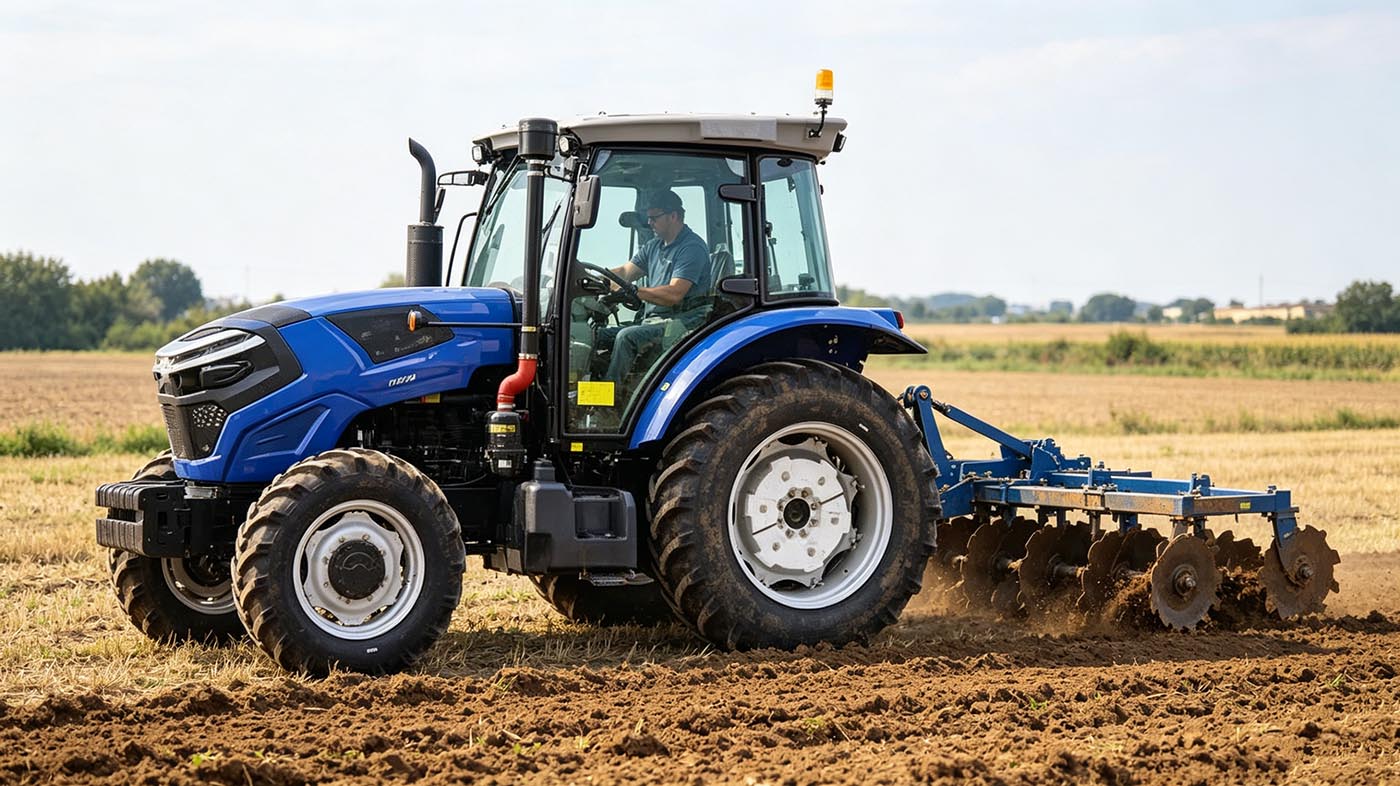
Job characteristics:
1. High pressure and flow rate, strong lifting force, and good stability under heavy loads.
2. Easy maintenance and disassembly, with individual replacement of parts.
3. Applicable models: medium and large tractors with 75 horsepower or more, mainstream configurations in.
Argentina with 75-120HP and Brazil with 100-150HP, suitable for hanging heavy-duty plows, deep loosening machines, and heavy-duty seeders.
4. Disadvantages: Multiple pipelines, multiple leakage points, and large space occupation
Semi split hydraulic system structure: independent external oil pump; The distributor and lifting cylinder are integrated inside the rear axle housing
Features: Structural compromise, moderate lifting force, few pipelines, compact layout
Applicable: 50-80 horsepower mid-range tractors, conventional models for both water and drought use
Integral (built-in, integrated) structure: The oil pump, distribution valve, and lifting cylinder are all integrated inside the rear axle housing, forming an integrated assembly.
Advantages: Compact structure, few oil pipes, low probability of oil leakage, small volume.
Disadvantages: The tonnage increase is relatively small, and major repairs require disassembling the rear axle, making maintenance difficult.
Applicable: Small horsepower tractors (≤ 70HP), mostly light agricultural tools, small plots, and orchard tractors.
1. Position adjustment type (position adjustment).
Core function: Control the fixed height of agricultural tools above the ground.
For example, setting the plowing depth and rake height, keeping the height of the farming tools unchanged while driving, and fixing the depth of the ground when lifting and landing.
Standard features, essential for all tractors.
2. Force adjustment type (resistance adjustment)
Core function: Sensing soil resistance and automatically adjusting tillage depth.
The soil in the field becomes harder and the resistance increases. The hydraulic system automatically lifts the agricultural tools slightly to prevent them from getting stuck or slipping; The soil is soft and automatically descends, with even plowing depth.
Heavy duty deep plowing, deep loosening, and heavy plowing are essential, and medium to high horsepower tractors are the mainstream configuration.
Simultaneously equipped with force adjustment and position adjustment, it can be freely switched, providing the optimal solution for deep field plowing and sowing operations. It is a standard configuration for main models exported to South America, Argentina, and Brazil.
Oil cylinder pressure relief, agricultural tools rely on their own weight to adapt to the ups and downs of the ground and shape themselves adaptively.

Applicable: disc harrow, lawn mower, beater, rake, to avoid scratching the ground and damaging the equipment.
Gear pump: Low cost, durable, easy to maintain, standard for the vast majority of tractors; Medium and low voltage, meeting the conventional demand for upgrading.
Piston pump: High pressure and high flow rate, extremely strong lifting force, optional for heavy-duty tractors with high horsepower, higher price.
Vane pump: low noise, stable flow, used in small quantities for low horsepower tractors.
Single acting hydraulic lifting, relying on hydraulic pressure to lift agricultural tools, causing the weight of the tools to fall; Most of them are old-fashioned small trailers, and their falling speed is uncontrollable.
Double acting hydraulic lifting, both lifting and lowering rely on hydraulic drive, with controllable lifting speed, limited position, and greater load-bearing capacity. It is the mainstream of modern tractors.
Multi way valve external hydraulic output (external quick connector), reserved external hydraulic oil port, can drive auxiliary hydraulic tools such as flipping plow, baler, steering assist, hydraulic support legs, etc. Export models are high-frequency optional.
Argentina 75-120HP dual-purpose water and drought, strong hydraulic lifting model.
Mainstream: semi split/split type+force position comprehensive adjustment+double acting oil. cylinder+external multi way valve, capable of supporting pulping machines, heavy-duty seeders, and stable takeoff and landing under heavy loads in dry and wet fields.

The 100-150HP four-wheel drive high tensile model from Brazil comes standard with a split hydraulic system, dual control of force and position, and a high flow gear pump. It is matched with a deep loosening machine, heavy-duty disc harrow, and multi row seeder, providing high lifting force to cope with heavy load operations in dry fields.
Small horsepower orchard/light tractor, commonly used with integral built-in hydraulic, simple structure, suitable for light agricultural tools.


