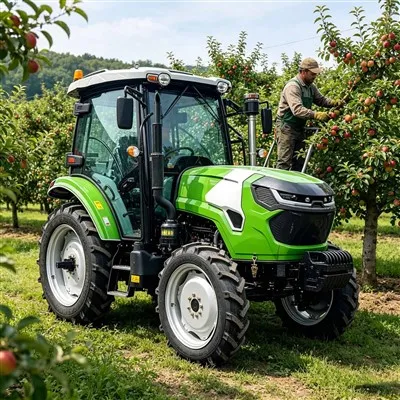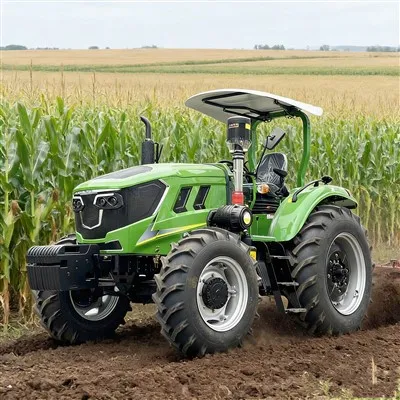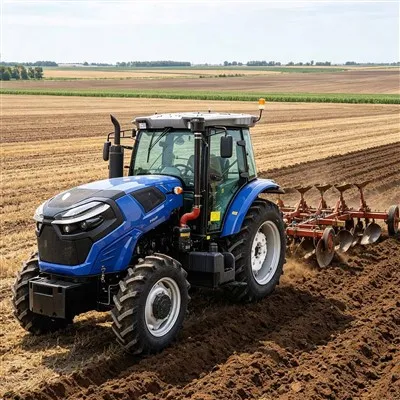
India's tractor manufacturing sector holds a dominant global position, accounting for approximately 33% of global production and holding the title of the world's largest exporter. Its competitiveness stems from a combination of strategic product alignment, economies of scale, policy synergy, and a world-class service ecosystem.

1. Perfect Product-Market Fit
Niche Specialization: India exclusively focuses on the sub-80 HP compact tractor segment. This perfectly matches the needs of smallholder farmers and fragmented landholdings common across Asia, Africa, and Latin America.
Rugged Reliability: Designed for harsh conditions. Indian tractors feature simplified mechanics, modular electronics, and reinforced chassis to handle high temperatures, dust, and voltage instability.
High Versatility: They serve as multi-purpose workhorses, used for plowing, harvesting, pumping water, and even transporting goods, offering a high return on investment.

2. Unmatched Economies of Scale & Cost Leadership
Mass Production: With an annual output of over 900,000 units, India achieves massive economies of scale that drive down manufacturing costs significantly.
Mature Supply Chain: Boasts a deep, integrated component supply chain, allowing for efficient production and lower costs compared to competitors.
Market Leadership: Brands like Mahindra alone capture over 46% of the domestic market, creating substantial pricing power and operational efficiency.
3. Agile Financial & Policy Support
Government Subsidies: Schemes like the Sub-Mission on Agricultural Mechanization (SMAM) provide direct subsidies, making tractors more affordable for farmers and stimulating domestic demand.
Innovative Financing: To overcome limited capital, the industry offers flexible payment plans including installments, "Buy Now Pay Later," and trade-in schemes, lowering the entry barrier for rural buyers.
4. Global Service & Localization Excellence
Last-Mile Support: Establishes an extensive network of dealers and service centers in rural areas. Technicians often reach farms via motorcycles, ensuring fast, affordable repairs and immediate access to spare parts.
Deep Localization: Operates in over 30 African countries and maintains local assembly plants (CKD), reducing logistics costs and ensuring products are tailored to local climates and crops.

5. First-Mover Advantage & Cultural Alignment
Early Global Expansion: Indian brands were early entrants in emerging markets, building strong brand recognition and trust decades before competitors.
Cultural Synergy: Shared linguistic and historical ties (e.g., English speaking populations) with parts of Africa and Asia facilitate easier market penetration and communication.
In summary, India's strength lies in not just selling a machine, but in delivering a complete, end-to-end solution that addresses the real-world challenges of agricultural communities worldwide.