In the future, smart agricultural machinery products will demonstrate continuous advancements in intelligence, a stronger focus on green and environmentally friendly technologies, and a growing range of market application scenarios. These trends are as follows:
Deep Integration and Upgrading of Intelligence
Multi-Technology Collaborative Development: Artificial intelligence, big data, the Internet of Things, and 5G will be deeply integrated with agricultural machinery, enabling more accurate autonomous navigation, more advanced automatic identification, and remote control.
For example, through the fusion of multimodal sensors, lidar, and millimeter-wave radar cameras, terrain modeling accuracy can be reduced to less than 5cm, and AI vision algorithms can identify crop pest and disease characteristics with over 90% accuracy.

Increasing Autonomous Driving Levels: Currently, the most widely used autonomous agricultural machinery products in my country are at Level 1. This level will evolve towards Levels 2-3 and higher, enabling minimal or even unmanned operation.
Intelligent Decision-Making and Optimization: Based on soil fertility maps and crop growth data, smart agricultural machinery can dynamically adjust operating parameters.
For example, a variable-speed seeder can dynamically adjust seeding density within a 15% adjustment range, achieving a 10%-15% increase in yield per mu.
Accelerating Green Development
Wide Application of New Energy: New energy technologies such as lithium batteries and hydrogen fuel cells will rapidly penetrate the agricultural machinery sector, with the market penetration rate of electric agricultural machinery projected to exceed 40% by 2028.
For example, the Liugong LT3504-CE tractor uses a hybrid system, reducing fuel consumption by half; Zoomlion's hydrogen-fueled harvester has achieved carbon neutrality in operational emissions.
Improving Environmental Performance: Intelligent agricultural machinery will place greater emphasis on reducing noise and pollution.
Through optimized design and technological improvements, energy efficiency will be improved, exhaust emissions will be reduced, and sustainable agricultural production will be achieved.

Expanding Market Application Scenarios
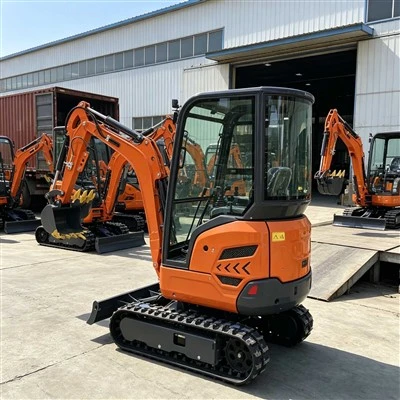
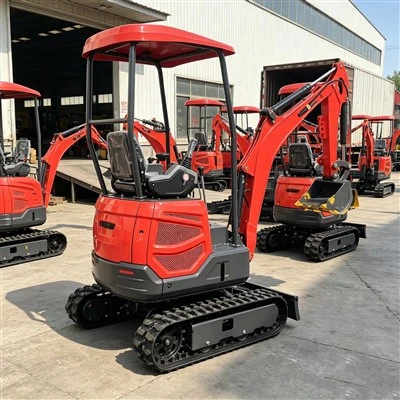
Multi-regional Penetration: The market will expand from traditional large-scale farmland to more areas, and from medium- and large-sized agricultural machinery to smaller agricultural machinery.
With the improvement of the industrial chain, cost reductions, and enterprise optimization of adaptability, intelligent agricultural machinery will accelerate its penetration into complex terrain and smaller agricultural machinery.
Deep Integration with Smart Farms: Smart farms are the new vision of future agriculture, and the implementation of unmanned farms will increase year by year.
Smart agricultural machinery will be deeply integrated with farm management systems, enabling information perception, quantitative decision-making, intelligent control, precise input, and personalized services throughout the entire agricultural production process.

The industry ecosystem continues to improve.
Cost reduction and widespread adoption: Initiatives such as domestic RTK modules replacing imported ones will reduce the cost of smart agricultural machinery equipment and promote its widespread adoption.
For example, navigation system costs have dropped by 28%, accelerating the adoption of affordable equipment priced around 12,000 yuan. The "equipment leasing + operation service" model lowers the barrier to entry for small and medium-sized farmers.
Establishing a standard system: Relevant industry standards will continue to improve.
For example, the "Technical Requirements for Autonomous Driving Systems for Smart Agricultural Machinery" defines three levels of accuracy and establishes a data interconnection protocol for agricultural machinery, facilitating cross-platform collaboration for equipment from different brands.
Service model innovation: Agricultural machinery companies will evolve from simple equipment manufacturers to integrated "equipment + service" solution providers, offering users one-stop services such as equipment leasing, operation services, remote monitoring, and technical support to meet their diverse needs.