

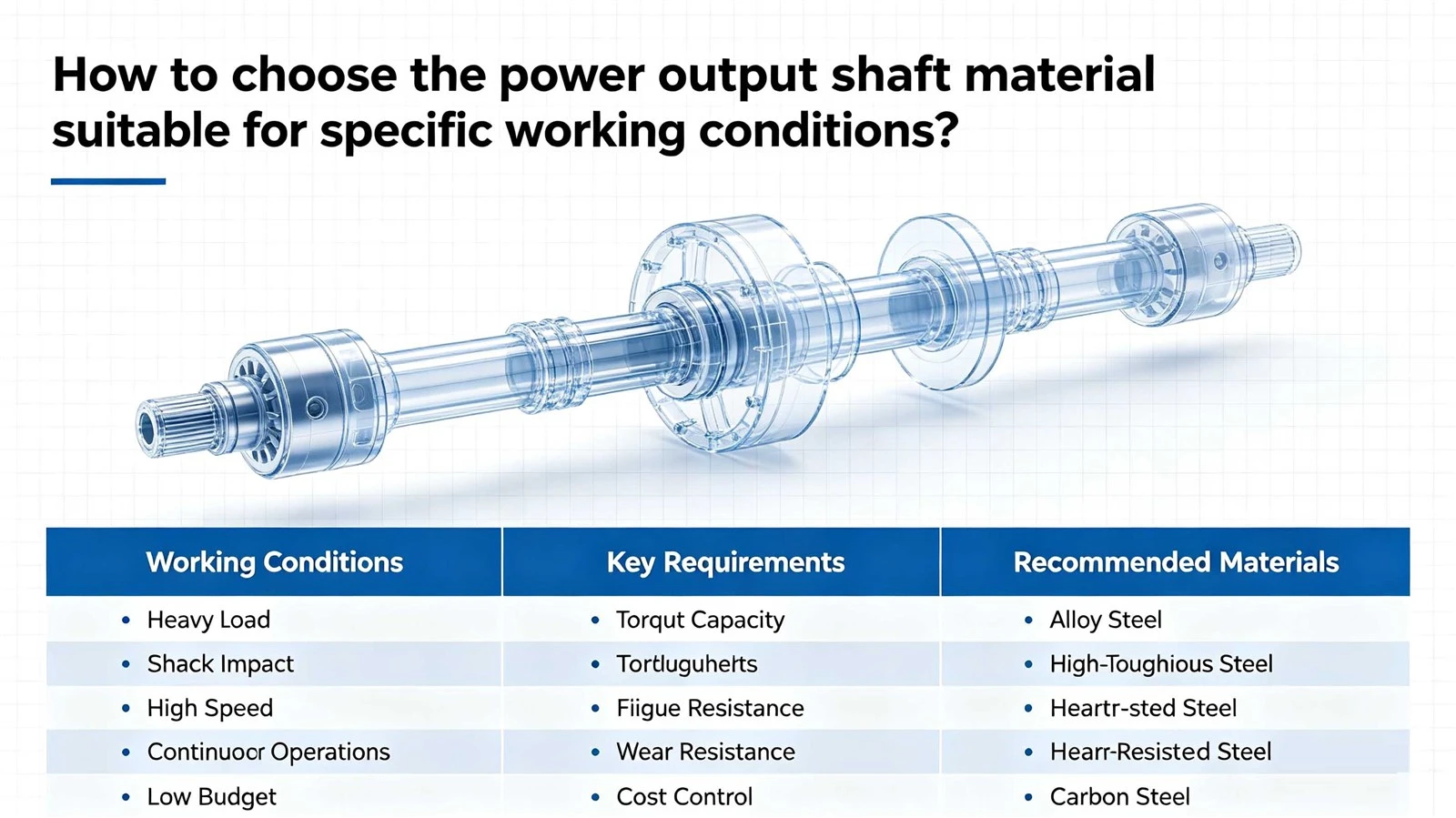
First, clarify the three core material selection criteria elements
Load type: Continuous stable load/Frequent impact stalling/Overloaded torque
Usage environment: Dry land dust-free, paddy field mud and water, construction site sand and gravel, outdoor high corrosion
Equipment attributes: lightweight agricultural machinery, conventional field agricultural machinery, orchard narrow width machinery, industrial engineering traction equipment
Accurate selection based on different scenarios
Scenario 1: Conventional dryland farming (rotary tillage, pesticide application, straw returning, ordinary sowing)
Recommended material: 40Cr forged blank+quenching and tempering treatment+high-frequency quenching of spline journal
Characteristics of working conditions: stable load, occasional small amount of stones stuck and impacted, less mud and water
Reason for selection: Strength, wear resistance, and optimal cost balance; The spline is quenched to prevent wear and tear, and the shaft neck is hardened to prevent groove wear and oil leakage;
Taboo: Do not use untreated 45 # steel, as it is prone to spline slippage and shaft neck oil leakage after 3-6 months.
Scenario 2: Paddy field operations (rice transplanting, paddy field rotary tillage, pulping machine)
Recommended material: 40Cr/42CrMo, overall heat treatment+surface blackening/electrophoretic rust prevention
Pain points of working conditions: mud and water intrusion, water vapor corrosion, easy failure of oil seals, rusting and locking of the shaft body
Additional requirements: The shaft neck should be quenched and the sealing surface widened, and undergo rust prevention and passivation treatment before leaving the factory;
It is not recommended to use ordinary carbon steel, as it is prone to rust pits and damage to oil seals, and the transmission shaft and splines may rust and cannot be disassembled.
Scenario 3: Precision seeding/mulching machine (PTO must be synchronized)
Recommended material: 40Cr or 20CrMnTi carburizing treatment
Synchronous PTO requires extremely high consistency in transmission speed, and there should be no slipping or loss of rotation due to spline clearance;
The carburizing process can ensure uniform hardness of the spline tooth surface and long-term stability of the fit clearance, ensuring precise seeding without drift.
Scenario 4: Small tractors in orchards/greenhouses, frequent disassembly and assembly of machinery
Recommendation: 20CrMnTi carburizing and quenching shaft
The body is narrow, the transmission shaft is often disassembled and docked, and the splines are repeatedly inserted and removed, resulting in significant wear and tear; The carburized surface has high hardness, resistance to collision and wear, and the longest service life.
Scenario 5: High horsepower agricultural machinery (over 120 horsepower, large field returning, deep loosening, heavy bundling)
Recommended material: 42CrMo forging and tempering+deep high-frequency quenching
High horsepower peak torque, strong resistance of agricultural tools entering the soil, and high instantaneous impact load;
42CrMo has higher yield strength and stronger torsional limit, significantly reducing the risk of shaft breakage compared to 40Cr.
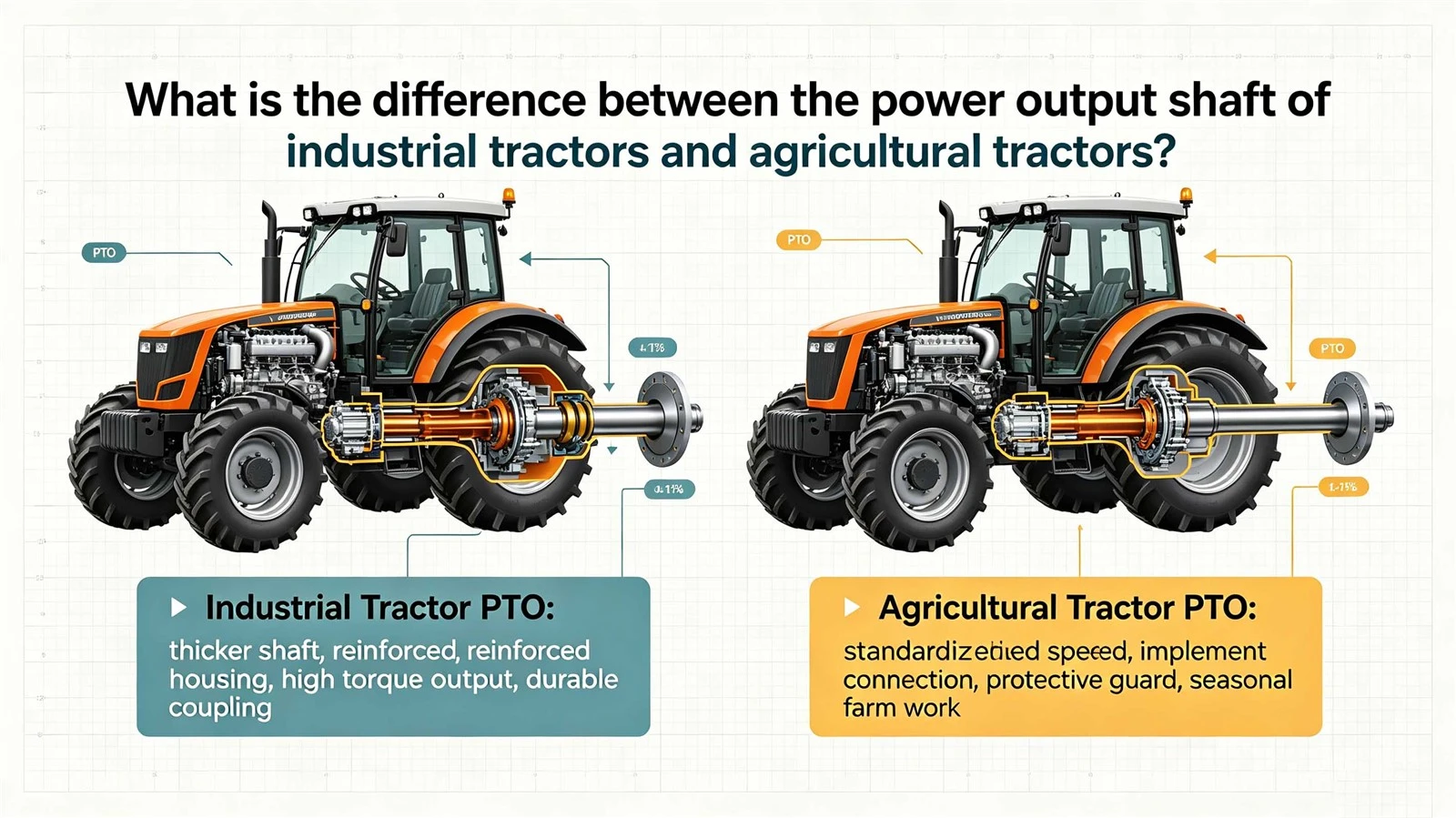
Scenario 6: Industrial tractor operating conditions (winch, crushing equipment, air compressor, trailer pump, dredging equipment)
① Conventional factory traction, water pump, and generator constant speed drive
42CrMo basic version is sufficient, with a moderately thicker shaft diameter and thicker splines;
② Strong impact conditions: equipment with frequent crushing hammer, winch lifting, and locked rotor
Must be forged with 42CrMo, quenched and tempered, and the spline must be quenched as a whole, and equipped with shear safety pins for secondary protection;
It is strictly prohibited to use 45 # or ordinary 40Cr, which can easily break the output shaft and even damage the gearbox housing during lifting or jamming.
Scenario 7: High Corrosion Outdoor Environment (Seaside Salt Spray, Chemical Plant Area, Long term Rainy Outdoor Storage)
The substrate is made of 42CrMo, and after processing, a galvanized/Dacromet coating is added to block electrochemical corrosion and avoid pitting corrosion of the shaft body and rapid damage to the oil seal.
Reverse selection of materials based on fault risk to avoid pitfalls
Frequent spline rounding and power slippage
Reason: Insufficient surface hardness → High frequency quenching is necessary, not only quenching without surface hardening;
Groove on the shaft neck, frequent oil leakage, ineffective oil seal replacement
The journal has not been quenched, and the friction and wear are too fast → Local quenching is specified in the designated journal area;
The axis is directly twisted off during the homework
If the material strength is insufficient or not quenched and tempered, directly upgrade to 42CrMo and require overall forging (prohibit casting shafts);
Winter low temperature environment is prone to brittle fracture
Choosing 42CrMo with sufficient quenching and tempering can improve low-temperature toughness and prevent high carbon steel from becoming brittle due to excessive quenching.
Process priority (material>forging>heat treatment>surface treatment)
Priority forging blank: The internal structure is dense and free of pores and cracks, far superior to direct turning of round steel;

Heat treatment is indispensable:
Quenching and tempering: ensuring the overall torsional toughness of the shaft;
High frequency quenching: spline+oil seal journal wear-resistant;
Light temporary use can be processed with round steel, but it must be quenched and tempered; Long term work is strictly prohibited without a heat-treated optical axis.
Minimalist Selection Formula
Ordinary farmland work: 40Cr quenching and tempering is sufficient;
Wet paddy fields are prone to rusting: 40Cr+rust prevention treatment;
High horsepower heavy load: directly loaded with 42CrMo;
Industrial engineering strong impact: 42CrMo forging deep quenching+safety pin;
Frequent disassembly and assembly of machinery: 20CrMnTi carburizing;
Low cost short-term use: 45 # quenching and tempering, not for long-term main components.
Email : sales@szleadray.com


