


When it comes to the world of agriculture, tractors are the workhorses that keep farms running smoothly. As a proud supplier of Red Farm Tractors, I often get asked about the maximum load these tractors can carry. This is a crucial question for farmers and agricultural businesses, as it directly impacts their productivity and efficiency. In this blog post, I'll delve into the factors that determine the maximum load capacity of a Red Farm Tractor and provide some insights to help you make informed decisions.
Understanding Load Capacity
The maximum load a tractor can carry is not a one - size - fits - all figure. It is influenced by several key factors, including the tractor's design, engine power, transmission, and the type of equipment it is using.
Tractor Design
Red Farm Tractors come in various designs, each tailored to different agricultural tasks. For instance, Wheel Tractors are known for their versatility and are commonly used for a wide range of operations such as plowing, tilling, and hauling. The design of the wheels, axles, and chassis plays a significant role in determining how much weight the tractor can handle. A well - designed chassis distributes the load evenly across the wheels, reducing the stress on individual components and allowing for a higher load capacity.
Engine Power
The engine is the heart of any tractor. A more powerful engine can generate more torque, which is essential for moving heavy loads. Red Farm Tractors are equipped with high - performance engines that are designed to provide sufficient power for various applications. The engine's horsepower rating gives an indication of its power output. Generally, tractors with higher horsepower ratings can carry heavier loads. However, it's important to note that the power needs to be effectively transferred to the wheels through the transmission system.
Transmission
The transmission in a Red Farm Tractor is responsible for transferring power from the engine to the wheels. There are different types of transmissions, such as manual, automatic, and continuously variable transmissions (CVT). A good transmission system allows the tractor to operate at the optimal speed and torque for the given load. For example, when carrying a heavy load, a tractor with a CVT can adjust the gear ratio continuously, ensuring that the engine operates within its power band and providing smooth and efficient operation.
Type of Equipment
The type of equipment attached to the tractor also affects its load - carrying capacity. For example, a front - end loader can significantly increase the tractor's ability to lift and carry heavy materials such as soil, gravel, or bales of hay. On the other hand, a plow or a tiller places different types of stress on the tractor, mainly in terms of traction and pulling force. When using a Red Farm Tractor with implements, it's important to consider the weight and the type of work the implement will perform.
Calculating the Maximum Load
Determining the exact maximum load a Red Farm Tractor can carry requires a combination of manufacturer specifications and practical considerations.
Manufacturer Specifications
The manufacturer provides detailed information about the tractor's load - carrying capacity in the owner's manual. This information includes the maximum weight the tractor can carry on its three - point hitch, the front - end loader capacity, and the gross vehicle weight rating (GVWR). The GVWR is the maximum weight of the tractor, including the tractor itself, any attached equipment, and the load it is carrying.
Practical Considerations
In real - world scenarios, several factors can affect the tractor's ability to carry a load. Terrain is one of the most important factors. A tractor may be able to carry a certain load on flat, hard ground, but the same load may be too heavy on a slope or soft, muddy terrain. The condition of the tractor, including the tire pressure, brake performance, and the overall mechanical condition, also plays a role. Worn - out tires or brakes can reduce the tractor's stability and safety when carrying a heavy load.
Examples of Load - Carrying Capacities
Let's take a look at some examples of Red Farm Tractors and their load - carrying capacities.
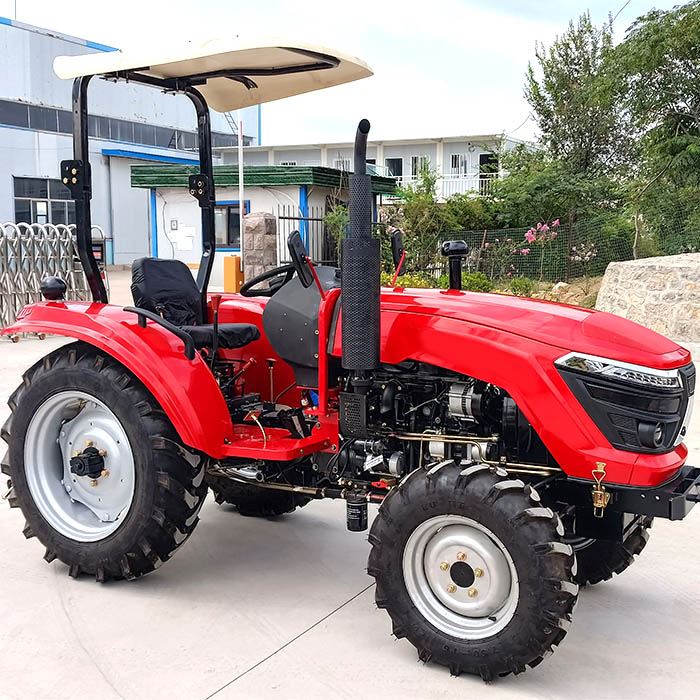

Farm Tractor for Acreage
These tractors are designed for medium - sized farms and are often used for a variety of tasks. A typical Farm Tractor for Acreage in our Red Farm Tractor lineup may have a three - point hitch capacity of around 2,000 to 3,000 pounds. This allows it to handle common implements such as mowers, cultivators, and small - to - medium - sized plows. If equipped with a front - end loader, the lifting capacity can range from 1,500 to 2,500 pounds, depending on the model.
2004 Tractor
The 2004 Tractor is a more heavy - duty model in our range. It is designed for larger farms and more demanding tasks. This tractor may have a three - point hitch capacity of 4,000 to 5,000 pounds, making it suitable for larger implements such as heavy - duty plows and large - scale tillers. The front - end loader on a 2004 Tractor can typically lift 3,000 to 4,000 pounds, allowing it to handle large amounts of material such as gravel or large bales of hay.
Importance of Staying within the Load Capacity
It's crucial to stay within the recommended load capacity of a Red Farm Tractor. Overloading a tractor can have several negative consequences.
Safety Risks
Overloading can reduce the tractor's stability, increasing the risk of tipping over. It can also put excessive stress on the brakes, tires, and other components, leading to premature wear and failure. In extreme cases, overloading can cause a loss of control, resulting in serious accidents.
Equipment Damage
Exceeding the load capacity can cause damage to the tractor's engine, transmission, and other mechanical components. This can lead to costly repairs and downtime, which can have a significant impact on a farm's productivity.
Reduced Efficiency
An overloaded tractor operates less efficiently. The engine has to work harder to move the excessive weight, which can result in increased fuel consumption and reduced performance.
Conclusion
As a supplier of Red Farm Tractors, I understand the importance of knowing the maximum load capacity of these tractors. By considering factors such as tractor design, engine power, transmission, and the type of equipment, farmers and agricultural businesses can make informed decisions about which tractor is right for their needs. It's always important to stay within the recommended load capacity to ensure safety, prevent equipment damage, and maintain efficiency.
If you're interested in learning more about our Red Farm Tractors and their load - carrying capacities, or if you're looking to purchase a tractor for your farm, I encourage you to reach out to us. We have a team of experts who can provide you with detailed information and help you find the perfect tractor for your specific requirements.
References
- Tractor Manufacturer's Manuals
- Agricultural Engineering Textbooks
- Industry Research Reports on Tractor Performance and Load Capacity


