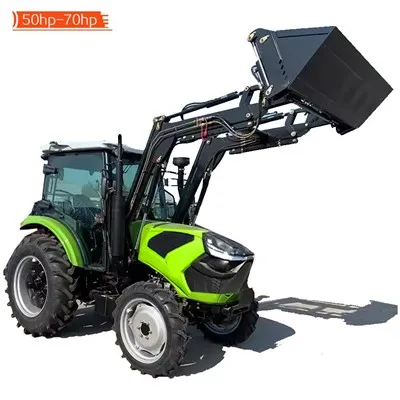


The working principle of the hydraulic system of a loader
The engine drives the hydraulic pump to rotate. The hydraulic pump sucks oil from the oil tank, converts mechanical energy into hydraulic energy, and outputs high-pressure oil. High-pressure oil is conveyed through oil pipes to various control components.
According to the work requirements, the control components adjust the flow direction, pressure and volume of the oil, causing the actuating components (hydraulic cylinders or hydraulic motors) to generate corresponding movements, thereby achieving various actions of the loader's working device, such as the lifting and lowering of the boom and the loading and unloading of the bucket.
Operating weight: This refers to the weight of the tractor loader when it is fully equipped and ready to operate, including the weight of the tractor, loader attachment, fuel, lubricants, and an operator. It affects the stability and traction of the machine.
Load capacity: It is the maximum weight that the loader can lift and carry. Usually, it is specified at a certain lifting height and outreach. For example, a common industrial tractor loader might have a load capacity of 1 - 5 tons.

Lifting height: This is the maximum height to which the loader can raise a load. It is an important parameter when loading materials onto trucks, storage racks, or other elevated platforms. Lifting heights can range from a few meters to over 5 meters in some larger models.
Reach: The horizontal distance that the loader can extend from the front of the tractor. It determines the ability to reach over obstacles or load materials from a distance.
Bucket capacity: The volume of the bucket attached to the loader, which is used to scoop and carry materials. Bucket capacities can vary widely depending on the application, from 0.5 cubic meters to several cubic meters.
Engine power: The power output of the tractor's engine, usually measured in horsepower (HP) or kilowatts (kW). Engine power is crucial for driving the tractor, operating the loader hydraulics, and performing various tasks efficiently. Common engine powers for industrial tractor loaders range from 30 to 100 kW or more.
Hydraulic system pressure: The pressure at which the hydraulic system operates. Higher hydraulic pressure allows for greater force and faster operation of the loader's boom and bucket. Typical hydraulic system pressures can range from 160 to 350 bar.
Tire size and type: The size and design of the tires affect the tractor loader's traction, stability, and maneuverability. Different tire types are suitable for different terrains, such as solid tires for indoor use or pneumatic tires with deep treads for rough outdoor surfaces.
Turning radius: It is the radius of the circle that the tractor loader makes when turning. A smaller turning radius means better maneuverability in tight spaces.
Dump angle: The angle at which the bucket can be tilted to dump its contents. A larger dump angle ensures complete emptying of the bucket.
Our Industrial tractors Advantages
Technologies such as hydraulic transmission and hydrodynamic transmission have been widely applied in the field of loaders
Simple structure
The structure of the mechanical transmission system is relatively simple, composed of some common mechanical components such as gears, shafts, chains, sprockets, etc., with low manufacturing and maintenance costs.
High reliability
After long-term development and practice, mechanical transmission technology has matured, and the working reliability of each component is relatively high. Under normal use and maintenance conditions, it can operate stably with few malfunctions.
High transmission efficiency
Under certain working conditions, mechanical transmission can achieve a relatively high transmission efficiency, with less power transmission loss. It can effectively transfer the engine's power to the driving wheels and working devices, thereby enhancing the working efficiency of the loader.
Hot Tags: Industrial Utility Tractors, China Industrial Utility Tractors manufacturers, factory, utility tractor pto power take off , utility tractor rental, utility tractor emissions, utility tractor visibility, utility tractor ergonomics, utility tractor ripper